How often should employee uniforms be replaced? For ordinary branded company apparel, use a condition-based replacement system supported by scheduled reviews. Review everyday employee apparel at least every six months, inspect heavily used uniforms every one to three months, and replace individual garments as soon as their condition, fit, cleanliness or function falls below your company standard.
A replacement schedule should guide purchasing and budgeting, not automatically retire apparel that is still performing well. A polo that still fits, functions and represents your company professionally can stay in rotation. A damaged, permanently stained or unusable garment should not have to wait until the next scheduled uniform order.
This guide expands on the replacement rules in our employee uniform policy guide and explains how to turn them into a practical purchasing, inspection and reordering routine.
Quick Answer: How Often Should Uniforms Be Replaced?
Review everyday company apparel at least every six months, check heavily used garments more frequently, and replace individual items whenever condition, fit, hygiene or required function falls below your standards. Use the calendar to plan purchasing, not to determine whether a damaged garment is acceptable.
How Long Do Work Uniforms Last?
There is no universal lifespan for branded workwear. Two employees wearing the same model of shirt can have very different replacement needs. A showroom employee may wear a polo indoors while a field technician wears the same style in hot vehicles, mechanical rooms and customer properties.
Use these proposed planning windows to establish your first employee uniform replacement schedule. They are purchasing estimates, not measured industry averages, warranties or mandatory retirement dates. Adjust them after reviewing your own garments.
| Uniform type or role | Formal review | Replacement budget window |
|---|---|---|
| Office and showroom polos | 6 months | 12–24 months |
| Retail and service shirts | 3–6 months | 6–12 months |
| Restaurant and cleaning uniforms | 1–3 months | 3–12 months |
| Construction and landscaping shirts | 1–3 months | 3–12 months |
| Company hats | 3–6 months | 6–12 months |
| Ordinary hoodies and jackets | Before each season of use | 12–24 months or longer |
These windows are intended for forecasting possible purchases, not replacing every garment in a department at once. Daily checks and immediate condition-based replacements still apply.
Seven Signs It Is Time to Replace Employee Uniforms
1. Faded or mismatched company colors
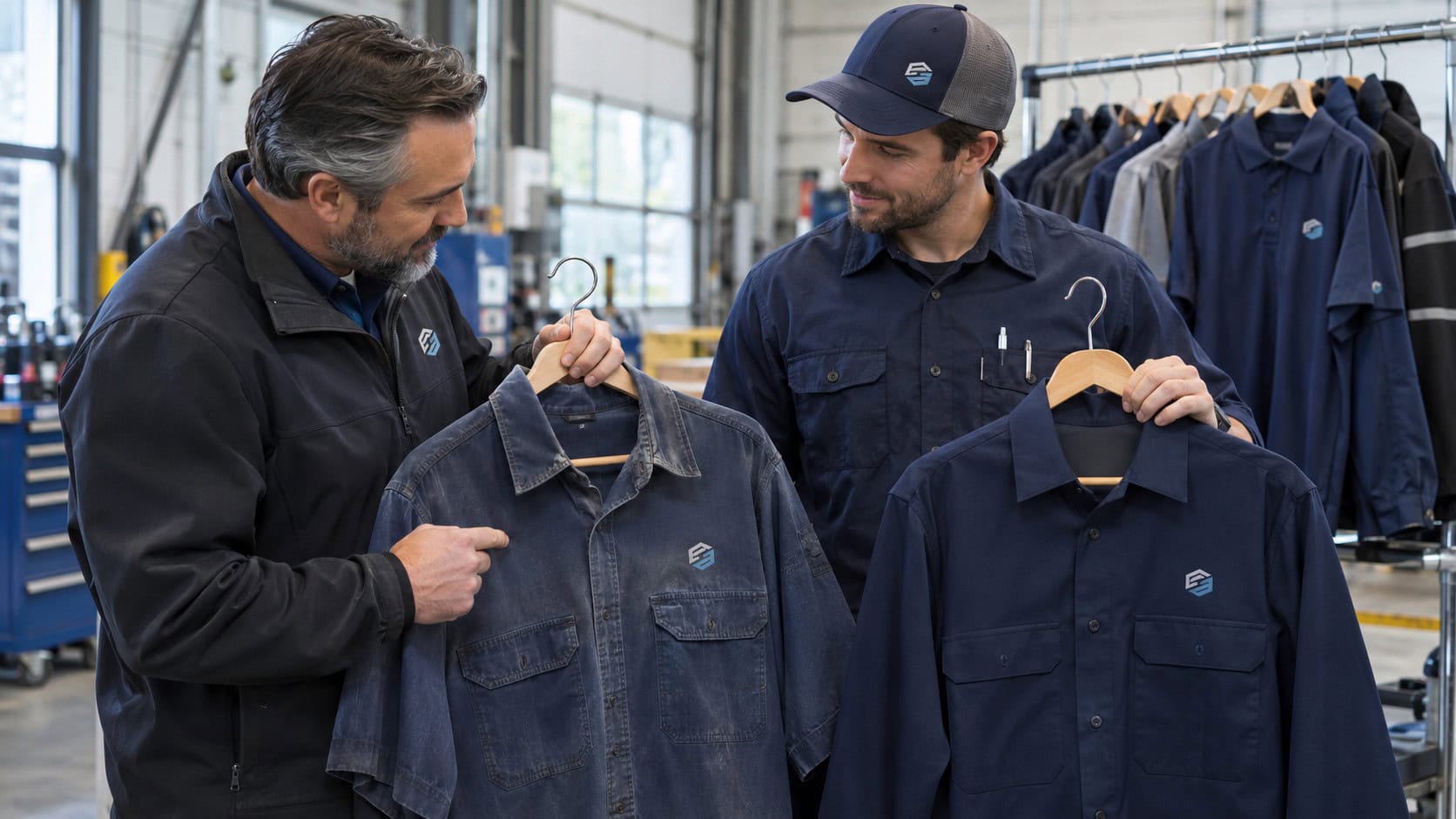
Compare freshly washed shirts in natural light. A navy polo that has faded substantially may look out of place next to new uniforms even if its fabric remains intact. Minor variation may be acceptable for field use, but set a consistent standard for customer-facing roles.
2. Permanent stains or persistent odors
Grease, food, cleaning chemicals and perspiration can leave lasting marks. Follow the garment’s approved cleaning instructions. If appropriate laundering cannot restore acceptable cleanliness, remove the item from the work rotation. Do not treat potentially hazardous contamination as a cosmetic stain.
3. Holes, thinning fabric or failing seams
Check underarms, elbows, shoulders, pockets and areas that rub against tools or equipment. A shirt may look acceptable from the front while the fabric around a seam is beginning to fail.
4. Damaged or unreadable logos
Look for loose embroidery, lifting print edges, peeling transfers or graphics that have lost readability. A shirt with a recognizable logo and minor wear may still be usable; a shirt with a badly damaged company name may no longer meet your branding standard.
5. Poor fit or restricted movement
Employees change sizes, and garments can shrink or lose their shape. Replace apparel that restricts reaching, bending or other normal duties. Confirm current sizes rather than automatically reordering the original size. Our employee uniform sizing guide can help.
6. Loss of garment function
Check jacket closures, cuffs, pockets and other features employees rely on. If a garment no longer performs its intended everyday function, repair it where appropriate or replace it.
7. Outdated branding or employee identification
A changed phone number, discontinued logo, incorrect employee name or outdated job title may justify replacement before the fabric wears out. Plan a transition date and separate apparel that can no longer represent the company.
Uniform planning principle: Replace the garment when it fails the job it was issued to do, not simply because another year has passed.
Should You Repair or Replace a Work Uniform?
Minor repairs can extend the useful life of company apparel when the underlying garment is still in good condition. A loose button, small seam opening or other repairable issue does not necessarily mean the entire garment should be discarded.
Replacement usually makes more sense when the same damage keeps returning, the fabric is thinning or badly worn, permanent stains or odors remain after proper care, the garment no longer fits correctly, the company branding is no longer readable, or a repair would not restore the garment to the appearance and function required for the employee’s role.
Protective clothing and required PPE should be evaluated separately. Do not use an ordinary cosmetic repair standard to determine whether protective apparel remains suitable for use. Follow applicable workplace requirements, employer safety procedures and manufacturer instructions.
What Makes Some Employee Uniforms Wear Out Faster?
Wear frequency and laundry rotation
Consider a five-day workweek. If two shirts are rotated evenly, each sees about 2.5 shifts per week, or roughly 130 wears in a 52-week year before accounting for time off. With five shirts, each sees about one shift per week, or roughly 52 wears. If shirts are washed after every shift, the difference also affects the number of wash cycles each garment experiences.
That does not guarantee a particular garment lifespan, but it explains why issuing too few shirts can concentrate wear. Read our uniform quantity guide to plan a rotation that matches the workweek.
Work environment and garment selection
Outdoor exposure, repeated kneeling or lifting, abrasive surfaces, equipment straps and frequent laundering all influence garment condition. A cleaning company may replace stained polos more often than an office team. A landscaping crew may wear through shirts at the shoulders or hem while its office staff keeps the same polo for another year.
If the same failure appears across several employees, investigate the style, fabric, fit or work environment before ordering another batch of identical garments.
Decoration and care
Embroidery is a useful option for many polos, caps and jackets, while screen printing and DTF or full-color printing can suit larger graphics on company tees. None of these decoration methods makes a garment immune to wear.
Check embroidery for broken or loose stitches and the surrounding fabric for damage. Inspect printed artwork for deterioration that affects appearance or readability.
Follow the specific garment and decoration care instructions rather than assuming every uniform can tolerate the same wash temperature, chemicals or drying process. Share our guide to washing embroidered and printed work shirts with employees where appropriate.
Build an Employee Uniform Replacement Schedule
Step 1: Set a clear condition standard
Define what counts as acceptable for each role. Customer-facing employees may need especially consistent colors and clean, readable logos. Field apparel may tolerate cosmetic wear that does not affect cleanliness, function or identification.
Step 2: Make condition reporting routine
Ask employees to report damaged, ill-fitting or unusable uniforms promptly. Supervisors can review heavily used apparel during monthly or quarterly check-ins and review lighter-use garments every six months. Avoid making employees wait for the next bulk order when they have no suitable uniform to wear.
Step 3: Keep a simple issue and replacement record
A spreadsheet is enough for many businesses. Record employee or department, garment style number, color, size, quantity issued, issue date, condition, replacement reason and next review date. Include the previous order reference and approved logo details so purchasing can match future orders.
Step 4: Maintain a small reserve
Keep spare garments in sizes your team actually uses. Separate inventory reserved for new hires from replacement stock where possible. Unnamed logo apparel is generally easier to allocate than shirts personalized with individual employee names.
Step 5: Review the results twice a year
Look at how many pieces were replaced and why. Repeated seam failures, fading, sizing problems or shortages should influence the next garment selection and quantity. Adjust your forecast to the actual experience of your team.
Sample Uniform Replacement Policy Wording
Employees should report company apparel that is damaged, no longer fits, cannot be adequately cleaned or no longer meets the appearance and functional standards of their role. Supervisors will review uniform condition at scheduled intervals and arrange replacements as needed. Safety-related apparel is managed separately under applicable workplace safety requirements.
Adapt this wording using our employee uniform policy template and have your HR or safety lead review the finished policy.
When to Reorder Company Shirts Before You Run Out
Set a reorder point for each frequently used style and size rather than waiting until the last spare is issued. A practical starting formula is:
Reorder point = expected demand during replenishment lead time + safety stock
For example, if your business expects to issue four navy large shirts during its normal replenishment window and wants two additional shirts available for unexpected needs, the reorder point is six. Review available stock and confirmed incoming orders when deciding whether to reorder.
Use your actual supplier lead time, including artwork approvals, decoration, delivery and any garment availability constraints. Do not assume last year’s turnaround will apply to every order.
Keep the manufacturer style number, color, decoration method, approved logo size and placement, and artwork reference together. If you are documenting a uniform program for future reorders, our company logo size guide explains how garment type, placement and decoration method affect the finished logo dimensions.
Before reordering, confirm that the original garment is still available and review a substitute if necessary. Even matching model numbers may show some shade variation between production lots or between new and previously laundered garments.
How Much Should a Business Budget for Uniform Replacement?
Separate initial uniform packages, new-hire apparel and replacement expenses. Otherwise, a growing team can make ordinary wear-related spending difficult to identify.
For an existing team, use this simple forecast:
Annual replacement budget = expected replacement quantities × decorated unit costs, plus applicable order expenses.
Consider a hypothetical service company with 20 field employees and five office employees. It forecasts two replacement tees per field employee at $20 each and one replacement polo per office employee at $30 each. These are illustrative amounts, not current Custom 2 Wear prices.
| Replacement item | Quantity | Example cost |
|---|---|---|
| Field tees | 40 × $20 | $800 |
| Office polos | 5 × $30 | $150 |
| Spare stock additions | 5 × $20 | $100 |
| Subtotal | 50 pieces | $1,050 |
The company would add applicable shipping, taxes and other order expenses, then budget separately for new hires and seasonal outerwear. After the first year, it can replace assumptions with actual issue records. For a broader approach, see our employee uniform cost guide.
When Should You Change the Uniform Style Instead of Reordering?
Repeated premature replacements can signal that the original garment is not a good fit for the job. If several employees report the same problem, test an alternative before committing to another full-team order.
- Office or showroom: Consider an embroidered polo with a fit that employees can comfortably wear throughout the day.
- Active service crews: Compare cotton and performance tees for comfort, work conditions, laundering and logo requirements.
- Seasonal teams: Evaluate layers separately from everyday shirts. A jacket should not be replaced on the same schedule simply because it was ordered at the same time.
Keep existing garments that still meet your standard in service during a planned transition unless a branding or functional requirement prevents it. For additional selection advice, read our guide to company uniforms employees actually want to wear.
Company Apparel Options for Replacement Orders
When your existing style is unavailable or no longer suits the role, compare a performance company polo for customer-facing staff, a printed cotton tee for everyday crew apparel, and a performance tee for more active duties. These current Custom 2 Wear catalog options are starting points for ordinary branded uniforms, not protective clothing recommendations.
-
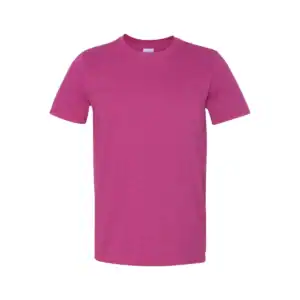 Price range: $12.95 through $19.95 Select options This product has options that may be chosen on the product page
-
Custom Team 365 TT11 Performance T-Shirt – Performance Company Tee to Pinterest (opens in a new window)
 Price range: $14.95 through $25.95 Select options This product has options that may be chosen on the product page
-
Custom Team 365 TT51 Performance Polo Shirt – Performance Company Polo to Pinterest (opens in a new window)
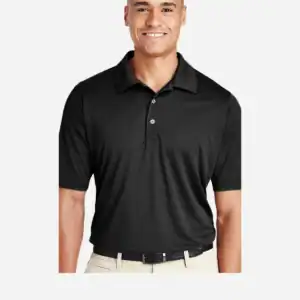 Price range: $19.95 through $30.95 Select options This product has options that may be chosen on the product page
Safety Apparel and PPE Need Separate Replacement Rules
Ordinary company shirts and protective apparel should not be managed under the same cosmetic replacement standard. For required high-visibility, flame-resistant or other protective clothing, follow the applicable workplace requirements, the employer’s hazard assessment, and the manufacturer’s inspection, cleaning, maintenance and retirement instructions.
Under OSHA 29 CFR 1910.132, defective or damaged personal protective equipment must not be used. A logo that still looks good does not establish that protective apparel remains suitable for its intended hazard. When protective performance is involved, safety requirements take priority over the ordinary appearance and replacement guidelines discussed in this article.
Frequently Asked Questions About Uniform Replacement
Should employee uniforms be replaced every year?
Not necessarily. An annual replacement budget is useful, but garments should be replaced according to condition, fit, hygiene and function. Some employees may need several replacements in a year, while lightly used garments may last longer.
How often should businesses inspect employee uniforms?
Employees should check their uniforms before use. As a planning starting point, review heavily used workwear every one to three months and lighter-use office apparel every six months.
Can issuing more shirts reduce uniform wear?
Yes. Rotating more shirts can reduce the number of wears and washes each individual shirt experiences over a given period. It does not eliminate wear or guarantee a specific lifespan.
Should a business replace all company uniforms at once?
Usually not. Replace individual worn-out items as needed and use scheduled orders to replenish stock. A complete rollout may make sense when changing company branding, approved garment styles or role requirements.
Who should pay for replacement employee uniforms?
Define responsibility in your uniform policy after reviewing applicable wage, labor and safety rules. Do not assume employees can be charged for required uniforms or protective apparel. Consult a qualified HR or legal professional when needed.
How long do work uniforms usually last?
There is no universal lifespan for employee uniforms. Lightly used office apparel may remain presentable considerably longer than shirts worn daily in construction, landscaping, cleaning, food service or other high-wear environments. Use replacement timeframes for budgeting, but make the final decision based on condition, fit, cleanliness and function.
Is it better to repair or replace a damaged employee uniform?
Minor damage may be worth repairing when the garment is otherwise in good condition and the repair restores its appearance and function. Replacement is usually more appropriate when damage repeatedly returns, fabric is badly worn, stains or odors remain after proper cleaning, fit is compromised, branding is unreadable or the garment can no longer perform its intended role.
How many spare uniforms should a business keep?
There is no fixed number that works for every business. Keep enough commonly used styles and sizes to cover expected replacements during your normal replenishment lead time, plus any inventory you want available for new hires or unexpected needs. Use your actual issue history and reorder lead time to adjust the reserve over time.
Keep Your Team Looking Consistent Without Overordering
A reliable uniform program combines regular reviews, a clear condition standard, accurate size records and a realistic reorder budget. Replace what needs replacing, keep usable garments in rotation and improve the original garment choice when the same problems keep appearing.
The goal is not to replace every company shirt on an arbitrary anniversary. It is to keep employees equipped with apparel that still fits, functions, looks professional and represents the business consistently.
Planning Your Next Company Uniform Reorder?
Send Custom 2 Wear your current garment details, employee quantities, sizes and logo requirements. We can review options for replenishing your existing uniform program or selecting a more suitable style for your team.