
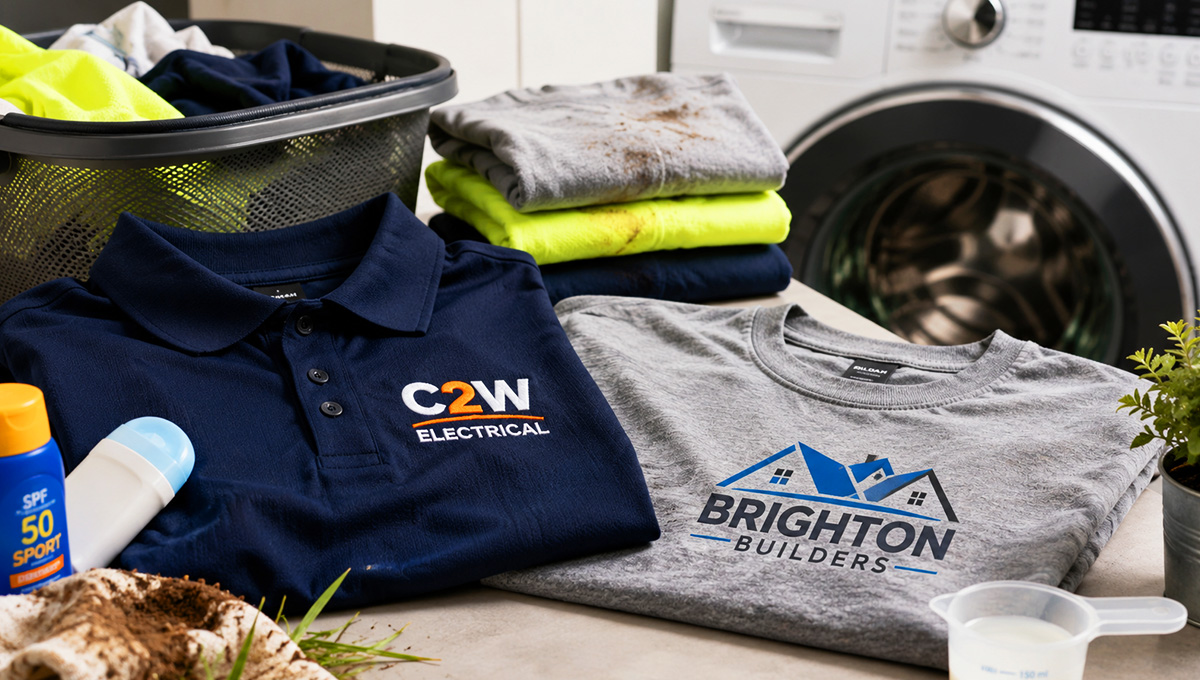
Summer is hard on employee uniforms.
Sweat, sunscreen, deodorant, grease, grass, dirt and frequent washing can make branded work shirts look worn long before the garment itself is ready to be replaced. Using too much heat, harsh chemicals or the wrong wash cycle can also fade fabric, damage performance materials and shorten the life of an embroidered or printed logo.
Knowing how to wash embroidered shirts and printed work shirts correctly helps protect the investment your business has made in custom apparel. It also keeps employees looking clean, consistent and professional throughout the busiest part of the year.
The exact instructions can vary by garment and decoration method, but a few basic habits will help most company uniforms last longer.
Quick Answer: How Should You Wash Branded Work Shirts?
For most everyday embroidered and printed work shirts:
- Read the garment care label.
- Turn the shirt inside out.
- Wash it with similar colors and lightweight garments.
- Use cool or cold water.
- Select a normal or gentle cycle.
- Use the recommended amount of mild detergent.
- Avoid high dryer heat.
- Never iron directly over a printed logo or transfer.
The garment’s attached care label should always come first. The Federal Trade Commission requires apparel care labels to identify at least one safe cleaning method, including any necessary washing, bleaching, drying or ironing warnings. Your decorator may also provide additional instructions for protecting the applied logo. Review the FTC’s explanation of clothing care labels.
Always Check the Garment Care Label First
Not every work shirt is made from the same material.
A cotton T-shirt, poly-cotton work shirt, moisture-wicking polo, stretch performance shirt and softshell jacket may all require different care. The decoration method is only one part of the equation. You must also protect the fabric, collar, buttons, stretch fibers and any special performance finish.
Before washing a company shirt, check the label for:
- Recommended water temperature
- Normal, permanent-press or delicate cycle
- Bleaching restrictions
- Dryer temperature
- Ironing temperature
- Dry-cleaning instructions
When the garment label and general decoration advice are different, follow the more cautious instruction or contact the apparel provider before washing.
The Best General Washing Routine for Custom Work Shirts
These steps work well as a starting point for most everyday company polos, T-shirts, sweatshirts and work shirts.
1. Treat Stains Before Washing
Inspect the shirt before placing it in the washer.
Fresh stains are generally easier to remove than stains that have already been washed and dried. Blot or lift off excess material instead of rubbing it deeper into the fibers.
Apply an appropriate pretreatment to the stained fabric, but avoid aggressively scrubbing across embroidery or a printed design. Test unfamiliar stain removers on an inconspicuous area first.
2. Turn the Shirt Inside Out
Turning a garment inside out reduces direct contact between the decorated surface and the washing-machine drum, zippers, buttons and other garments.
It also exposes the inside of the shirt—the area that collects much of the sweat, body oil and deodorant—to the wash water and detergent.
Inside-out washing is especially helpful for:
- Printed T-shirts
- DTF-decorated shirts
- Embroidered polos
- Performance uniforms
- Dark company apparel
- Shirts with large back graphics
3. Separate by Color and Fabric Weight
Wash light and dark colors separately, particularly during the first few washes.
It is also smart to separate lightweight uniform shirts from:
- Heavy jeans
- Bath towels
- Rough canvas workwear
- Garments with exposed hook-and-loop fasteners
- Clothing with large metal zippers
- Heavily soiled shop rags
Heavy or abrasive items create more friction and can snag embroidery, wear down fabric and rub against printed designs.
4. Use Cool or Cold Water
Cooler water is generally the safest starting point for decorated apparel unless the garment label requires something different.
Excessive heat may contribute to:
- Fabric shrinkage
- Color fading
- Damage to stretch fibers
- Premature wear of printed designs
- Distortion of some performance materials
Cold-water washing is also commonly recommended for moisture-wicking and compression garments because high temperatures can damage synthetic performance fibers.
5. Use the Correct Amount of Detergent
More detergent does not automatically make a dirty work shirt cleaner.
Too much can leave residue in the fabric, particularly when the washer is overloaded or the rinse cycle cannot remove it completely. Use the amount recommended for the load size, water hardness and detergent type.
A mild detergent is a sensible choice for routine uniform care. Avoid pouring concentrated detergent directly onto embroidery or printed decoration unless the product specifically instructs you to do so.
6. Be Careful With Bleach
Chlorine bleach can alter garment colors and may affect thread, fabric or printed decoration.
Do not use it unless the care label specifically permits it. Even products marketed as color-safe or non-chlorine should be tested before being used on an entire uniform order.
A small spot test is especially important when treating:
- Dark work shirts
- Bright company colors
- Performance polyester
- Multi-color embroidery
- Shirts with large printed graphics
7. Do Not Overload the Washer
Uniform shirts need room to move through the wash water.
An overloaded washer can prevent detergent and water from circulating properly. It can also increase wrinkling and friction between garments.
Wash heavily soiled work clothing in manageable loads rather than packing the machine as tightly as possible.
8. Air-Dry or Use Low Heat
High dryer temperatures are one of the most common sources of avoidable wear.
When possible, hang work shirts or lay them flat to dry. When machine drying is permitted, use the lowest effective heat setting and remove the garments promptly.
Do not leave damp uniforms crumpled in the washer or inside a closed work bag. Allowing sweaty shirts to dry before laundry day can help prevent odors from settling into performance fabrics.
How to Wash Embroidered Shirts and Polos
Embroidery is created by stitching thread directly into the garment. It is durable and well suited to company polos, jackets, hats and professional uniforms, but the stitched surface can still snag or become distorted through rough handling.
For better embroidered shirt care:
- Turn the garment inside out.
- Wash it with similar lightweight apparel.
- Close nearby zippers or fasteners.
- Use cool water unless the label says otherwise.
- Select a normal or gentle cycle.
- Avoid scrubbing directly across the stitching.
- Air-dry or tumble-dry on low.
- Do not pull loose thread ends.
When a thread end becomes visible, do not tug on it. Pulling may loosen additional stitches. Carefully trim a harmless loose end or contact the embroidery provider when the design appears to be unraveling.
When ironing an embroidered polo, turn it inside out and use a low setting appropriate for the garment fabric. A clean pressing cloth can be placed between the iron and the back of the embroidered area.
Businesses selecting new manager, office or customer-facing uniforms can also review our collection of custom embroidered polos with a company logo.
How to Wash Screen-Printed Work Shirts
Screen printing uses ink applied through a prepared screen and cured onto the garment. A properly produced screen print can withstand regular use, but repeated abrasion and high heat may eventually contribute to fading or cracking.
To protect a screen-printed work shirt:
- Wash it inside out.
- Use cool water.
- Wash similar colors together.
- Avoid aggressive stain treatment directly on the print.
- Use low dryer heat or air-dry.
- Do not iron directly over the printed design.
- Avoid dry cleaning unless the garment and decoration are approved for it.
This becomes especially important with larger back graphics because more of the design can rub against the washer, dryer and other garments.
For uniforms that need a lightweight front logo, large back design, phone number or service list, explore our custom printed logo T-shirts.
How to Wash DTF-Printed Shirts
DTF, or direct-to-film printing, uses a printed transfer and adhesive that are heat-applied to the garment. It works across a wide range of fabrics and is useful for detailed, colorful company logos.
To care for a DTF work shirt:
- Turn it inside out before washing.
- Use cool or cold water.
- Choose a gentle or normal cycle.
- Avoid chlorine bleach.
- Avoid high dryer heat.
- Do not iron directly on the transfer.
- Do not scrape or pick at the edges of the design.
When ironing is necessary, iron the shirt from the reverse side using the lowest temperature appropriate for the garment. Keep direct heat away from the transfer.
How to Wash DTG-Printed Shirts
DTG, or direct-to-garment printing, applies ink directly to the fabric. It is often chosen for detailed artwork, gradients and full-color designs with a softer feel.
The recommended routine is similar to other printed garments:
- Turn the shirt inside out.
- Wash with like colors.
- Use cool water and mild detergent.
- Avoid harsh bleach.
- Air-dry or tumble-dry on low.
- Avoid direct ironing over the artwork.
Although DTG ink is printed into the garment rather than applied as a separate vinyl graphic, careful washing still helps preserve the color and overall appearance.
Our custom apparel services page explains how embroidery, DTF, DTG and screen printing are used for different garment types and order requirements.
How to Wash Moisture-Wicking Summer Work Shirts
Performance shirts need slightly different attention from ordinary cotton or poly-cotton uniforms.
Fabric softeners and dryer sheets can leave a coating on some synthetic performance fabrics. That residue may interfere with moisture management and make odors harder to remove.
For moisture-wicking work shirts:
- Check the manufacturer’s label.
- Turn the shirt inside out.
- Wash with other lightweight performance garments.
- Use cold water.
- Use a gentle cycle.
- Avoid excessive detergent.
- Skip fabric softener when instructed.
- Air-dry or use low heat.
Avoid washing lightweight performance shirts with lint-producing towels, fleece, heavy denim or garments with exposed hook-and-loop fasteners.
Teams that need better hot-weather uniforms can also read our guide to choosing breathable work shirts with a logo for summer. Manufacturer guidance from Nike and Under Armour similarly recommends cold water, low heat and avoiding fabric softeners for many moisture-wicking garments.
How to Remove Common Summer Stains From Work Shirts
Summer uniforms encounter different stains than office clothing. Treating them promptly can prevent a temporary spill from becoming a permanent uniform problem.
Sweat and Deodorant
Do not let damp, sweaty uniforms remain balled up in a vehicle, locker or laundry hamper.
Allow them to dry and treat visible discoloration before washing. Use a garment-safe stain remover or detergent and follow its directions. Avoid aggressive brushing over a logo.
For persistent discoloration, consult a reliable sweat-stain removal guide and check the shirt’s care label before using vinegar, peroxide, baking soda or another home treatment. Some ingredients may alter dark or brightly colored fabric.
Sunscreen
Lift away excess sunscreen without spreading it across the shirt. Rinse and pretreat the affected fabric according to the stain remover’s directions.
Do not rub the stain aggressively into an embroidered logo or printed transfer. Tide recommends removing excess sunscreen, rinsing the garment and pretreating the stain before washing.
Grease and Oil
Blot excess grease instead of rubbing it deeper into the fibers.
Apply a garment-safe grease treatment or liquid detergent to the stained area and allow it to work according to the product directions. Rinse thoroughly if dish soap or another hand-washing product is used before putting the shirt into a washing machine.
Most importantly, inspect the stain before drying. Dryer heat can make an oil or grease stain more difficult to remove.
Grass, Mud and Soil
Let heavy mud dry enough to remove loose material without grinding it into the fabric. Scrape or brush away the excess, rinse the stain and apply a compatible detergent or pretreatment.
Do not automatically use the hottest wash setting. Use the warmest temperature permitted by the garment label and decoration instructions.
Food and Drink
Remove solid material with a spoon or dull edge, then blot liquids with a clean cloth.
Pretreat the stain promptly. Different substances respond to different cleaning methods, so identify the spill before selecting hot water, cold water or a stain remover.
Do Not Dry a Shirt Until the Stain Is Gone
After washing, inspect the garment while it is still damp.
When the stain remains, repeat the treatment rather than placing the shirt into a hot dryer. Heat can make some remaining stains more difficult to remove.
Can You Iron a Shirt With an Embroidered or Printed Logo?
Yes, many decorated garments can be ironed carefully, but the fabric label and decoration method matter.
For embroidered shirts:
- Turn the garment inside out.
- Use the temperature recommended for the fabric.
- Place a clean cloth between the iron and the embroidery.
- Avoid crushing raised stitching with heavy pressure.
For printed shirts:
- Never place a hot iron directly on the design.
- Iron from the reverse side.
- Use a low setting.
- Place a pressing cloth between the iron and garment.
- Avoid steam when the decoration provider advises against it.
When the shirt is made from heat-sensitive performance material, ironing may not be recommended at all.
Create a Simple Uniform Care Rule for Employees
Uniform-care instructions should not depend on employees remembering an informal conversation from their first day.
Include a short care section in the company handbook or uniform policy. It can also be printed on a card and distributed with each employee apparel package.
Businesses can use the following general language as a starting point:
Employee Uniform Care Instructions
Read and follow the care label attached to each garment. Unless otherwise instructed, wash company shirts inside out with similar colors using cool water and the recommended amount of mild detergent. Avoid chlorine bleach, excessive dryer heat and direct ironing over embroidered or printed logos. Treat stains promptly and report damaged or permanently stained uniforms to a supervisor.
The instructions should be adjusted to match the actual garments and decoration methods used by the company.
Our free employee uniform policy template includes sections for uniform care, replacement, approved apparel and employee acknowledgment.
When Should a Company Work Shirt Be Replaced?
Even properly maintained uniforms do not last forever.
A work shirt should be reviewed for replacement when it has:
- Permanent customer-visible stains
- Heavy fading or discoloration
- Holes, tears or open seams
- A stretched or damaged collar
- A logo that is peeling, cracking or unraveling
- Excessive pilling
- A poor or unsafe fit
- Odors that remain after proper washing
- Damage that makes the employee look unprofessional
The goal is not to replace every garment at the first sign of ordinary wear. The goal is to prevent employees from representing the business in apparel that looks neglected, inconsistent or no longer fit for the job.
A written employee uniform policy for a small business can explain who is responsible for reporting damage and when replacement apparel will be issued.
Important Safety Exception: Contaminated Work Clothing
These general instructions are intended for ordinary branded uniforms—not clothing contaminated by hazardous workplace substances.
Employees should not automatically take home apparel exposed to lead, asbestos, hazardous chemicals, blood or other regulated contaminants. Depending on the hazard and applicable rules, the employer may need to collect, contain and professionally launder or dispose of the garments.
OSHA has specifically advised that certain contaminated work clothes should not be taken home for routine laundering. Businesses should follow the safety rules that apply to their materials, industry and protective equipment. Review OSHA’s guidance concerning contaminated work clothing.
Protect Your Uniform Investment
Quality decoration is only one part of a successful employee uniform program.
Employees also need appropriate garments, clear care instructions and a straightforward replacement process. Washing shirts inside out, limiting high heat, treating stains promptly and following the care label can help embroidery and printing continue to represent the business professionally.
When it is time to replace worn apparel or build a coordinated uniform package, Custom 2 Wear can help you choose garments and decoration methods suited to your team, work environment and budget.
Need New Branded Work Shirts for Your Team?
Custom 2 Wear provides professional embroidery, DTF, DTG and screen printing for company polos, T-shirts, performance apparel, hoodies, jackets, hats and workwear.
We can help standardize your garment styles, company colors, logo placement and decoration specifications so future replacement orders remain consistent.
Request a custom apparel quote for your team.
Frequently Asked Questions About Washing Embroidered and Printed Work Shirts
Can embroidered shirts go in a washing machine?
Most machine-washable embroidered shirts can be washed in a washing machine. Check the garment care label, turn the shirt inside out, use cool water and avoid washing it with heavy or abrasive items that could snag the stitching.
Should embroidered shirts be washed inside out?
Yes, turning an embroidered shirt inside out can reduce direct friction and help protect the stitched design from zippers, fasteners and the washing-machine drum.
Can printed work shirts go in a dryer?
Many printed shirts can be machine dried when the garment label allows it, but low heat is generally safer for the print and fabric. Air-drying can further reduce heat exposure. Avoid high heat unless specifically permitted.
Can I use fabric softener on moisture-wicking work shirts?
Many performance-apparel manufacturers recommend avoiding fabric softener because residue may interfere with moisture-wicking properties. Follow the instructions on the garment label.
Can I iron over an embroidered or printed company logo?
Do not iron directly over a printed logo or heat-applied transfer. Iron the garment from the reverse side using a low setting and a pressing cloth. Embroidery should also be ironed carefully from the back to avoid flattening or damaging the stitching.
How do I remove sweat odor from company work shirts?
Allow sweaty shirts to dry instead of leaving them balled up, turn them inside out, use the recommended amount of detergent and wash them promptly according to the care label. Avoid excessive detergent and fabric softener on performance garments because residue can contribute to lingering odors.
When should an employee work shirt be replaced?
Replace a shirt when stains, fading, tears, damaged decoration, poor fit or persistent odors prevent it from presenting a clean and professional company appearance.