
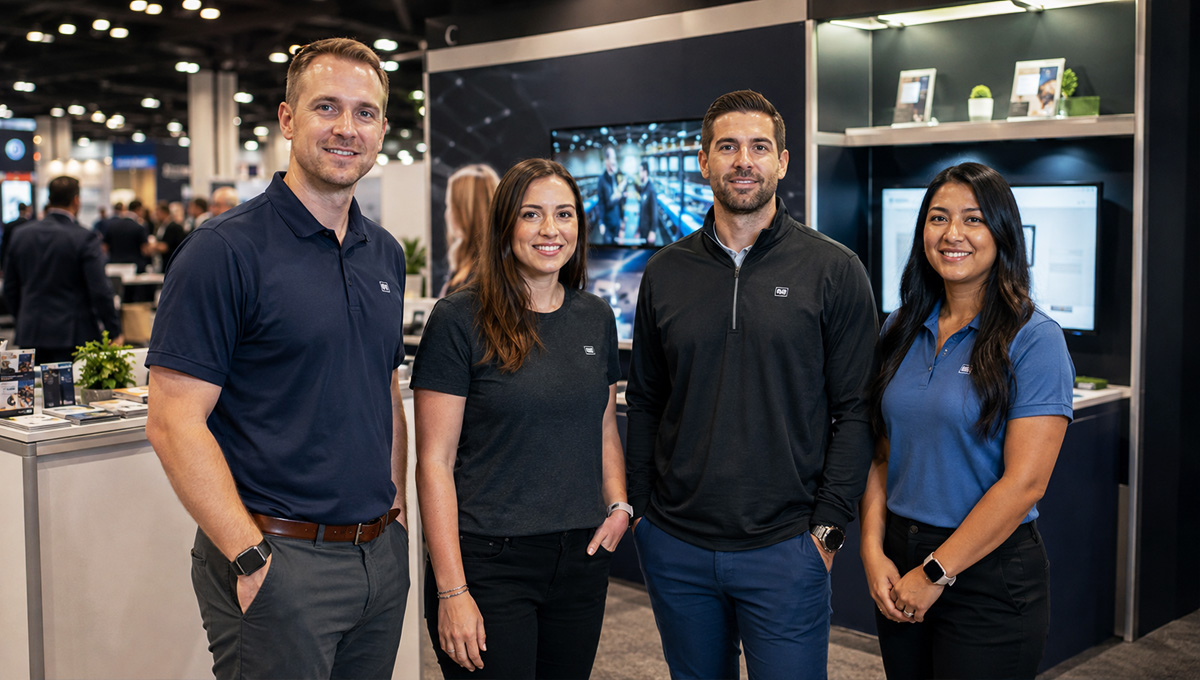
A trade show gives potential customers only a few seconds to form an impression of your business. Your exhibit, signage, printed materials, and product presentation all matter, but the people working in the booth are often the most visible part of the brand.
The right trade show staff apparel helps attendees identify your team, makes the booth look organized, and gives employees a consistent appearance without making them uncomfortable through a long day of conversations, demonstrations, and walking.
That does not mean every company should order the same polo shirt for every event. A contractor exhibiting at a local home show may need a different look from a software company attending a professional conference. A business running product demonstrations may need practical T-shirts, while a sales team meeting corporate buyers may look more appropriate in embroidered polos or quarter-zips.
This guide explains how small businesses can choose trade show shirts, polos, jackets, hats, colors, logo placements, and quantities that fit the event, the booth, and the people wearing them.
Quick Answer: What Should Trade Show Staff Wear?
For many small-business trade show teams, a practical apparel package includes:
- Embroidered polos for a polished, customer-facing appearance
- Printed or embroidered T-shirts for casual shows, product demonstrations, and active booth work
- Quarter-zips or lightweight jackets for travel, cold exhibit halls, and layered outfits
- Comfortable neutral pants that coordinate across the team
- Supportive, clean footwear suitable for standing and walking
Use the same logo, color palette, and general dress standard across the team, but allow enough flexibility for different roles, body types, and temperature preferences.
Why Trade Show Staff Apparel Matters
Booth apparel should do more than display a company logo. It should help the team perform its job throughout the event.
A coordinated appearance can:
- Help attendees quickly identify employees
- Separate booth staff from visitors
- Make a small business look organized and prepared
- Reinforce the colors and identity used in the exhibit
- Create consistency in event photos and social media content
- Give employees a clear standard for what to wear
- Reduce last-minute uncertainty before the event
- Extend brand visibility beyond the booth
The apparel should support the business rather than distract from it. A clean, coordinated team usually creates a stronger impression than employees wearing several unrelated garments, colors, and logo styles.
Start With the Type of Trade Show
Before selecting apparel, consider the environment in which it will be worn. The right level of formality depends on the audience, industry, booth activity, and expectations of the event.
| Event Type | Recommended Direction | Good Apparel Options |
|---|---|---|
| Professional conference | Polished and understated | Embroidered polos, button-downs, quarter-zips |
| Home, construction, or contractor show | Professional but approachable | Polos, work shirts, branded T-shirts, jackets |
| Food, hospitality, or retail expo | Clean, energetic, and brand-forward | Polos, fitted T-shirts, aprons, hats |
| Product demonstration | Comfortable and practical | Performance T-shirts, polos, work shirts |
| Community or consumer event | Friendly and highly recognizable | Printed T-shirts, hoodies, polos, hats |
| Recruitment or career fair | Professional and welcoming | Embroidered polos, quarter-zips, jackets |
Walk the line between being appropriately dressed and looking overdressed for the setting. A formal corporate event may call for understated embroidered apparel, while a lively consumer expo may support brighter colors and more visible branding.
Best Apparel Options for Trade Show Teams
Embroidered Polo Shirts
Custom embroidered polos are one of the most versatile choices for trade show staff. They create a professional appearance without requiring a jacket, tie, or formal business outfit.
Polos work especially well for:
- Sales representatives
- Managers and owners
- Professional service companies
- Technology and business conferences
- Recruiting events
- Customer-facing booth staff
A small left-chest logo is usually enough. It identifies the company while keeping the shirt clean and easy to coordinate with pants, skirts, jackets, or other layers.
Performance polos can be helpful for warm venues or active staff members. Cotton and cotton-blend polos may provide a more traditional appearance. The right choice depends on comfort, fabric preference, event environment, and desired presentation.
Custom Logo T-Shirts
Custom logo T-shirts can be an excellent option when the show is casual, energetic, or physically active.
T-shirts may be appropriate for:
- Product demonstrations
- Consumer shows
- Startup events
- Community expos
- Fitness and recreation events
- Hands-on booth activities
- Setup and breakdown crews
A T-shirt can carry a larger printed design than a polo. That makes it useful when the company name or message needs to be visible from farther away.
Keep the design purposeful. A trade show staff shirt should still be easy to read and should not resemble a crowded promotional flyer.
Quarter-Zips, Pullovers, and Lightweight Jackets
Exhibit halls can feel warm during setup and cold once air conditioning is running. Layering gives employees more control over comfort without abandoning the coordinated team appearance.
Custom embroidered jackets, quarter-zips, and lightweight pullovers can be worn over polos or T-shirts while keeping the logo visible.
These layers are particularly useful for:
- Multi-day conferences
- Travel days
- Outdoor portions of an event
- Cold convention centers
- Fall and winter shows
- Managers moving between meetings and the booth
Choose outerwear in the same color family as the core shirt. Employees should not have to cover the company logo with unrelated personal sweaters or coats whenever the temperature changes.
Button-Down Shirts
Button-down shirts can work for industries where a polo may feel too casual. They are appropriate for executive teams, professional services, financial organizations, luxury products, and events involving scheduled business meetings.
Keep embroidery compact and place it on the left chest. Large back designs and heavy decoration can work against the more refined appearance of this garment.
Custom Hats
Custom business hats can be useful at outdoor exhibits, contractor shows, agricultural events, sporting expos, product demonstrations, and casual consumer events.
Hats should fit the business and the setting. They may look natural for a landscaping company, equipment supplier, brewery, outdoor brand, or contractor, but they may feel out of place at a formal financial or legal conference.
When hats are included, use one approved model and color rather than allowing every employee to wear a different cap.
Polos or T-Shirts: Which Is Better for a Trade Show?
The choice usually comes down to the audience, the staff’s role, and the desired brand impression.
| Consideration | Embroidered Polo | Custom T-Shirt |
|---|---|---|
| Overall appearance | Polished and professional | Casual and approachable |
| Best decoration | Compact embroidery | Printing or small embroidery |
| Logo visibility | Subtle to moderate | Moderate to high |
| Best use | Sales, meetings, professional services | Demonstrations, consumer shows, active booths |
| Large back design | Usually unnecessary | Often practical |
| Layering | Works well under quarter-zips and jackets | Works well under hoodies and casual jackets |
A mixed package can also work. Sales staff may wear embroidered polos while employees running demonstrations wear branded T-shirts. The garments can remain coordinated through matching colors and logo treatment.
Choose Apparel Employees Can Wear All Day
A shirt may look good during a brief fitting but become uncomfortable after several hours of standing, reaching, bending, carrying materials, and speaking with attendees.
Consider:
- Fabric weight
- Breathability
- Stretch and ease of movement
- Collar comfort
- Garment length
- Fit through the shoulders and torso
- Whether employees will wear a layer underneath
- How easily the garment wrinkles during travel
- Whether the fabric shows moisture easily
Do not choose apparel based only on a catalog photograph. Review the size chart and consider ordering samples when the event is important, the team is large, or the chosen garment is unfamiliar.
Use Consistent Colors Without Making Everyone Identical
The booth, signs, banners, table coverings, printed materials, and staff apparel should look like parts of the same visual system.
That does not require every employee to wear an identical outfit. A practical color plan might include:
- Navy polos with khaki or black pants
- Black T-shirts with dark jeans
- Gray polos with black quarter-zips
- Company-color shirts with neutral pants
- Different shirt colors for separate team roles
Choose one or two approved garment colors. Too many options can make the booth team appear less coordinated and can complicate ordering.
Should Staff Apparel Match the Booth Exactly?
The garments should coordinate with the booth, but an exact color match is not always necessary. Contrast can make the staff easier to recognize.
For example, employees wearing navy shirts may stand out clearly against a light booth. Staff in a bright brand color may be easy to identify when the exhibit itself uses mostly neutral backgrounds.
Best Logo Placement for Trade Show Apparel
The logo should remain visible without overwhelming the wearer.
Left Chest
A left-chest logo is the strongest general choice for polos, button-downs, jackets, and quarter-zips. It provides identification during face-to-face conversations and works well in event photographs.
Center Chest
A center-chest logo can work well on casual T-shirts when the design is simple and moderately sized.
Full Back
A back print is useful when staff members frequently face away from the aisle or move around the venue. It can include:
- Company name
- Short tagline
- Website
- STAFF or TEAM
- A simple service description
A large back design is usually more appropriate for T-shirts and work shirts than for professional polos.
Sleeve
A sleeve can hold a small secondary logo, event name, sponsor mark, or subtle brand element. It should support the main design rather than compete with it.
Right Chest
The right chest may be used for an employee’s name, department, title, or certification when that information helps the conversation.
Review the complete logo placement guide before combining several locations. Every placement should have a clear purpose.
Should Trade Show Shirts Include Employee Names?
Adding names can make conversations more personal and help returning attendees find the same representative later.
Name embroidery is most useful for:
- Owners and managers
- Sales representatives
- Technical specialists
- Employees with clearly defined booth roles
- Teams that attend several events each year
There are also disadvantages. A personalized garment cannot easily be reassigned to another employee, and a misspelled name requires replacement.
For temporary staff or volunteers, removable name badges may be more practical. The shirt can then remain part of the company’s reusable event inventory.
Should Different Roles Wear Different Colors?
Role-based colors can help at large or busy events, but the system should remain simple.
Possible examples include:
- One color for sales representatives
- One color for technical specialists
- A jacket or quarter-zip for managers
- A brightly colored shirt for event support staff
- A STAFF back print for employees circulating outside the booth
For a small booth with three or four employees, one coordinated outfit is usually enough. Separate colors become more useful when the team is large or when attendees need to find a specific type of assistance.
How Many Trade Show Shirts Does Each Employee Need?
The answer depends on the length of the event, travel schedule, access to laundry, and whether employees will attend dinners or meetings after show hours.
| Event Length | Recommended Starting Quantity |
|---|---|
| One-day event | One shirt per employee, plus a few team backups |
| Two-day event | Two shirts per employee |
| Three-day event | Three shirts per employee, or two shirts plus an alternate branded outfit |
| Frequent annual exhibitors | A reusable capsule of polos, T-shirts, and layers |
Keep at least a few generic backup shirts in common sizes. Spills, travel delays, incorrect sizing, forgotten luggage, and last-minute staff changes can all create a need for replacements.
Sample Trade Show Apparel Packages
One-Day Local Expo
- One printed T-shirt or embroidered polo per employee
- One or two generic backup shirts
- Optional branded hat for an outdoor event
Three-Day Professional Conference
- Two embroidered polos per employee
- One alternate polo or premium branded T-shirt
- One embroidered quarter-zip or lightweight jacket
- Generic backup garments in common sizes
Contractor or Home Show
- Two embroidered polos or durable work shirts
- One branded T-shirt for setup or demonstrations
- One quarter-zip, jacket, or hoodie
- Optional embroidered cap
Casual Consumer Show
- Two coordinated printed T-shirts
- One hoodie or lightweight layer
- Large back identification when staff members circulate through the venue
How to Collect Trade Show Staff Sizes
Do not estimate employee sizes from memory. Share the exact product size chart and collect each selection in writing.
The form should include:
- Employee name
- Garment type
- Requested size
- Men’s, women’s, or unisex fit
- Preferred color, when options are allowed
- Name or title spelling
- Layering preference
Use the employee uniform sizing guide to build a more reliable process and reduce unused apparel.
Prepare the Logo Before Ordering
The artwork used on a booth banner may not automatically work on a polo, sleeve, hat, or small chest location.
Before placing the order, confirm:
- The current company logo is being used
- The artwork is available in a production-ready format
- Small lettering will remain readable
- Thin lines and detailed elements can be reproduced
- The logo has enough contrast against the garment
- A light and dark version is available when needed
- Names, titles, websites, and phone numbers are correct
Review the guide to logo file types for custom embroidery and printing before sending a screenshot or low-resolution image.
When Should Trade Show Apparel Be Ordered?
Start planning before booth setup, travel, and printed-material deadlines begin competing for attention.
The ordering process may include:
- Choosing garments
- Checking color and size availability
- Collecting employee sizes
- Preparing artwork
- Reviewing a digital mockup
- Confirming personalization
- Producing the apparel
- Shipping or pickup
- Inspecting and distributing the finished order
Begin earlier when the order includes several garment styles, individual names, multiple logo locations, extended sizes, or a large team.
Use the guide explaining how far in advance to order custom event shirts to plan around the show date.
Common Trade Show Apparel Mistakes
Ordering Apparel That Is Too Formal
A stiff or overly formal outfit can feel uncomfortable and disconnected from a casual, hands-on exhibit. Match the clothing to the actual audience and booth activity.
Ordering Apparel That Is Too Casual
A worn-looking T-shirt may undermine a business offering premium professional services. A polished polo, quarter-zip, or jacket may be more appropriate.
Using Too Many Garment Colors
Several unrelated colors make a booth team harder to identify. Establish one simple color system before ordering.
Choosing Style Over Comfort
Employees who are uncomfortable, overheated, or constantly adjusting their clothing will have a harder time focusing on attendees.
Placing Too Much Information on the Shirt
A logo, slogan, service list, phone number, website, QR code, and multiple sponsor marks can make the garment difficult to read. Prioritize the information that serves the booth team’s role.
Forgetting a Branded Layer
When an exhibit hall becomes cold, employees may cover the approved shirt with unrelated personal clothing. Include a coordinated quarter-zip or jacket when temperature is likely to be an issue.
Ordering Only the Exact Number Needed
Keep several generic backups for spills, sizing problems, and last-minute team changes.
Waiting Until the Booth Is Nearly Ready
Trade show apparel should be planned alongside the booth graphics and printed materials, not treated as a final detail after everything else is finished.
Trade Show Staff Apparel Checklist
Before approving the order, confirm the following:
- The apparel matches the event’s level of formality
- The garments are comfortable for long shifts
- The team has a clear color standard
- The apparel coordinates with the booth
- The logo is current and production-ready
- The logo placement is appropriate for each garment
- Names and titles have been proofread
- Employees selected sizes from the correct charts
- Women’s, men’s, unisex, and extended-size needs were considered
- Each employee has enough shirts for the event length
- Branded layers are available when needed
- Generic backup shirts are included
- The delivery date leaves time for inspection and distribution
Build Apparel That Works Beyond One Event
The strongest trade show apparel can often become part of the company’s broader uniform program.
An embroidered polo may also be used for sales meetings, customer visits, recruiting events, training sessions, and company photographs. A quarter-zip can become everyday office apparel. A branded T-shirt can support community events, casual workdays, and product demonstrations.
Using versatile garments improves consistency and reduces the need to create an entirely new apparel order for every event.
Need Custom Trade Show Staff Apparel?
Custom 2 Wear helps small businesses create coordinated apparel for trade shows, conferences, expos, recruiting events, product demonstrations, and other customer-facing events.
Available options include custom T-shirts, embroidered polos, hats, jackets, quarter-zips, hoodies, workwear, and complete staff apparel packages.
Plan Your Trade Show Apparel Order
Include the event date, team size, number of show days, preferred garments, logo locations, size range, and any employee personalization when requesting pricing.
Frequently Asked Questions About Trade Show Staff Apparel
What should employees wear at a trade show?
Employees should wear coordinated, branded apparel that matches the event’s level of formality and remains comfortable throughout the day. Common choices include embroidered polos, custom T-shirts, quarter-zips, lightweight jackets, and neutral pants.
Are polos or T-shirts better for trade show staff?
Polos generally create a more polished appearance for sales teams, managers, and professional conferences. T-shirts are often better for casual events, product demonstrations, active booth work, and highly visible printed designs.
Where should a logo go on a trade show shirt?
A left-chest logo is a versatile choice for polos, jackets, quarter-zips, and button-downs. T-shirts can also use a center-chest or full-back design. The placement should remain visible without making the garment look crowded.
How many shirts does each employee need for a trade show?
A useful starting point is one clean shirt for each event day. A three-day conference may require three shirts or two shirts plus an alternate branded outfit. Keep several generic backups in common sizes.
Should trade show shirts have employee names?
Names can make conversations more personal and help visitors identify representatives. They work best for permanent sales staff, owners, managers, and technical specialists. Generic shirts may be more practical for temporary staff or reusable event inventory.
Should every trade show employee wear the same shirt?
Not necessarily. Different roles can wear polos, T-shirts, or layers while still following the same logo and color system. Small teams often benefit from one consistent outfit, while larger teams may use different colors or garments to identify roles.
How far ahead should trade show apparel be ordered?
Begin planning several weeks before the event so there is time to choose apparel, collect sizes, prepare artwork, approve the mockup, complete production, and inspect the finished order. Complex or personalized orders should begin earlier.
What color is best for trade show staff apparel?
Choose a color that coordinates with the booth, provides strong logo contrast, and remains practical throughout the event. Navy, black, gray, and company brand colors are common choices. One or two approved colors are usually easier to manage than several unrelated options.