
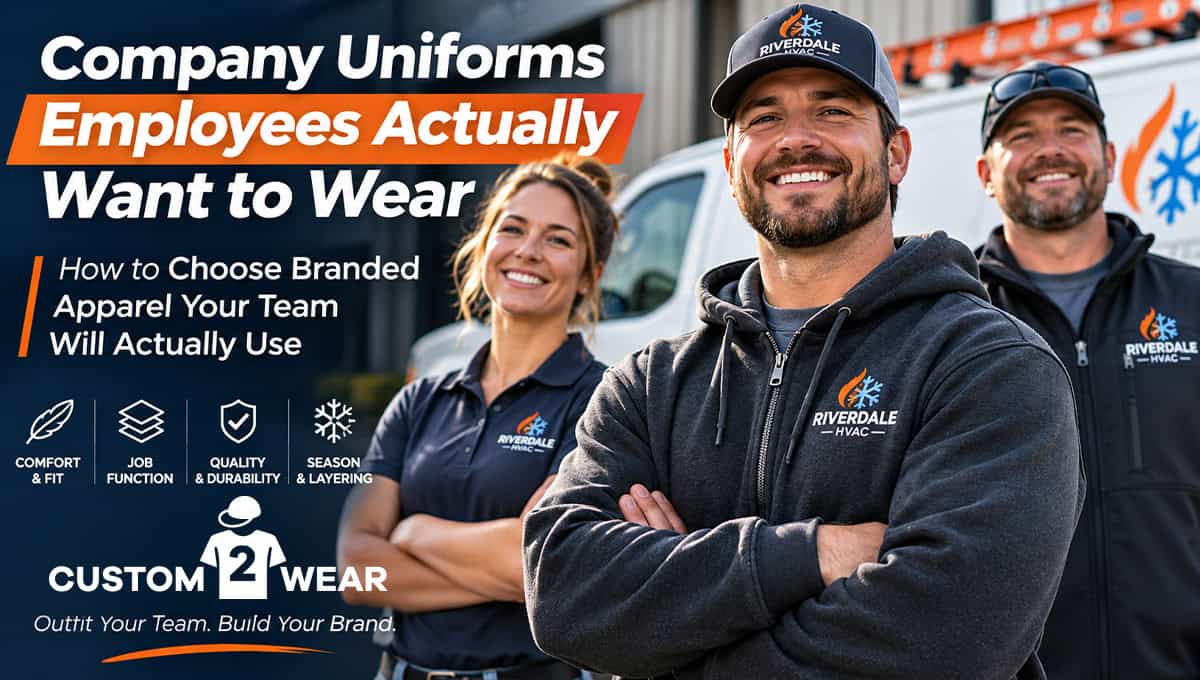
Good company apparel for employees does two jobs: it represents the business and works for the people wearing it. A shirt that looks sharp in a product photo can still fail on a job site, at a service counter or during a long shift if the fabric, fit or cut is wrong.
That is why ordering employee uniforms should start with wearability—not logo size. This guide shows business owners and purchasing managers how to choose branded workwear, embroidered polos, custom work shirts, T-shirts and company hoodies that employees can comfortably use, wash and reorder.
Quick answer: What makes employees actually wear company apparel?
Choose garments around each job, let employees confirm fit, match fabric and layers to the environment, keep logo decoration comfortable, and make laundering and replacement realistic. A consistent brand does not require one identical shirt for every role.
The “Would They Wear It Without the Logo?” Test
Before committing to an order, ask one question about every proposed uniform garment:
If the company logo disappeared tomorrow, would your employee still choose to wear this garment?
If the answer is no, find out why. Maybe the shirt feels stiff, the collar rubs, the size range is limited, the hoodie is too heavy or the style makes routine tasks awkward. Those are purchasing problems worth solving before a logo is added.
This test does not mean uniforms must look like casual streetwear or that job-specific safety requirements can be ignored. It means a garment should earn its place in the uniform program through function, comfort and appearance—not rely on the company logo to justify an otherwise poor choice.
Don’t make employees wear the company hoodie. Make the company hoodie the one they want to wear.
Try the test with actual employees
- Pick two or three realistic garment candidates within your brand colors and job requirements.
- Get hands-on feedback: ask representatives from different roles to check texture, stretch, coverage, pockets, collars, closures and sleeve movement.
- Try the garment during normal tasks: reaching, bending, lifting, driving, greeting customers and layering over a work shirt as appropriate.
- Ask what would prevent regular use: overheating, itching, awkward fit, hard care, poor pocket access or an impractical style.
- Choose the best-performing option before approving artwork and ordering for the whole team.
Choose Company Apparel for Employees by Job, Not Just Department Color
A uniform program can share the same logo, palette and placement standards while using different garments. The service technician, office coordinator and warehouse picker do not necessarily need identical clothing to look like one company.
| Employee role | Apparel direction | What to test |
|---|---|---|
| Customer-facing staff | Polos, clean work shirts or quarter-zips | Collar comfort, neat appearance and all-day fit |
| Active field crews | Work shirts or breathable performance tees | Movement, heat, abrasion and laundering frequency |
| Warehouse and facility teams | Flexible tees, polos and adjustable layers | Reach, ventilation and snag risks |
| Drivers and mixed-location staff | Polos or tees plus zip-up hoodies or jackets | Seated comfort and easy layer changes |
| Office and event teams | Polos, soft tees or polished layers | Appropriate appearance and size choice |
Best for: Businesses with mixed roles that need a recognizable uniform system without forcing everyone into the same garment.
For a broader framework covering approved styles and replacement rules, see our guide to a small-business uniform program.
Comfort and Fit Are Purchasing Specifications
1. Check movement, not just how a shirt looks standing still
Employees bend, sit, stretch, drive, reach overhead and carry equipment. Ask whether a shirt rides up, pulls across the shoulders or becomes restrictive when worn under a jacket. An attractive fit on a hanger is not a substitute for a short workday wear test.
2. Offer realistic fit and size choices
One unisex cut does not fit every person equally well. Depending on the garments and workforce, offering appropriate alternative fits can improve coverage, comfort and acceptance without compromising brand consistency. Gather sizes directly and review the size chart for each selected garment rather than assuming a single size carries over between brands or apparel types.
Our employee uniform sizing guide covers how to collect size information before a decorated order.
Sizing reminder
Have employees try on the exact style when practical. Allow for base layers, movement and individual fit preferences. Confirm sizes before decoration, when exchanges or changes may be more difficult.
3. Match the fabric to the shift
Soft cotton tees may feel excellent for indoor or casual use, while some performance fabrics are useful for active work in warmer settings. A woven work shirt can offer a more structured look for service crews. Compare breathability, stretch, texture, collar construction, opacity and expected wash frequency—rather than treating fabric weight or price as a reliable measure of comfort by itself.
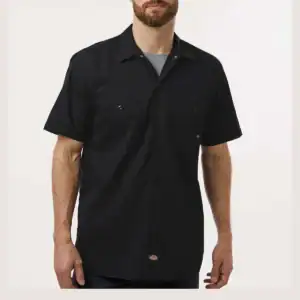
For example, the in-stock Team 365 TT51 performance polo provides a polyester interlock option for teams considering a lightweight company polo. The Dickies S535 industrial short-sleeve work shirt represents a more structured work-shirt direction. Neither replaces a hands-on fit and job suitability check.
Plan for Climate, Layers and Different Working Conditions
Summer field work, air-conditioned offices, loading docks and winter service calls impose different clothing needs. Start with the daily environment, not a single all-season uniform purchase.
- Warm or active settings: prioritize comfort, ventilation, freedom of movement and appropriate garment care.
- Changing temperatures: consider easy-on, easy-off layers, especially for drivers and staff moving between indoors and outdoors.
- Cold conditions: choose a system that allows suitable base, insulating and weather-protective layers where necessary.
- Hazard-specific workplaces: determine required protective clothing first; ordinary branded apparel is not automatically suitable protective equipment.
OSHA’s cold-stress guidance recommends multiple loose-fitting layers and protection against wind and rain in cold environments. That is a work-safety consideration, not a reason to treat a standard company hoodie as protective outerwear.
See our detailed cold-weather work uniform guide for a hoodie-jacket layering approach, and our company hoodie buying guide for pullover versus zip-up choices and garment weights.
Put the Logo Where It Works With the Garment
A large, stiff-feeling decoration can undermine an otherwise comfortable shirt. Placement also interacts with pockets, seams, zippers, stretch and how the employee wears additional layers. Start with the garment and the artwork, then decide how to decorate it.
- Embroidery: often appropriate for smaller left-chest logos on polos, work shirts and outerwear when the artwork and garment support it. Thread coverage and backing should be considered on lighter or stretchier garments.
- DTF or other full-color printing: useful for designs with more colors or detail, but artwork size, placement and the feel of the printed area should be evaluated for the garment and work role.
- Screen printing: often worth comparing for repeat designs and larger runs; design complexity, color count and order quantity affect the practical choice.
For an embroidered polo, a restrained left-chest logo can preserve the look of everyday business clothing. For a printed company T-shirt, a smaller front mark may feel more wearable than a large graphic across the torso. Sleeve or back branding can be useful, but not if it interferes with comfort or the work environment. Our business apparel logo placement guide offers additional examples, and our embroidery and printing services page outlines available methods.
Comparing garments for several employee roles?
Share your team’s jobs, expected quantities and logo. We can help narrow the garment and decoration options before you place a larger order.
Make Washability Part of the Uniform Decision
Work clothing is washed repeatedly. A shirt may feel great on day one but prove impractical if it needs special handling that does not match an employee’s schedule or work environment. Check the garment’s actual care label and any decoration-specific instructions before making it the standard uniform.
Think through the full cycle: how dirty the job gets, whether stains are likely, how often items must be washed, whether they can dry in time for the next shift and whether the decoration is appropriate for the planned care. Our embroidered and printed work-shirt care guide covers practical laundering questions for decorated apparel.
A demanding job and a limited laundry window may justify more shirts per person. Rather than guessing, work backward from the schedule and washing frequency using our uniform quantity planning guide.
Keep the Program Consistent Without Making Every Employee Identical
Reorder consistency depends on documenting more than a company color name. Record the approved garment model and color, alternate fits, logo file, decoration method, logo dimensions and position, size breakdown, and any department variations. Keep a sample or approved mockup as a reference for new hires and later orders.
Use a clear employee uniform policy to explain approved styles, care and replacement expectations. The purpose of a policy is to keep the program easy to operate—not to compensate for uncomfortable garment choices.
Three Live Apparel Options Worth Comparing
These currently available Custom 2 Wear examples illustrate different needs. They are starting points for selection, not a claim that one garment fits every employee:
- Customer-facing or active polo teams: the Team 365 TT51 performance polo offers a lightweight performance-style option.
- Structured service uniforms: the Dickies S535 work shirt suits consideration when the team needs a traditional industrial work-shirt silhouette.
- Flexible seasonal layers: the Independent Trading Co. SS4500Z zip-up hoodie is an option for staff who frequently adjust layers.
-
-
Custom Team 365 TT51 Performance Polo Shirt – Performance Company Polo to Pinterest (opens in a new window)
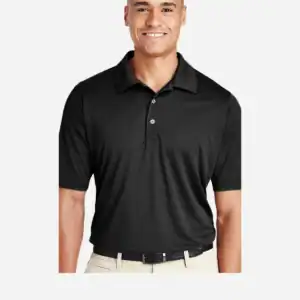 Price range: $19.95 through $30.95 Select options This product has options that may be chosen on the product page
-
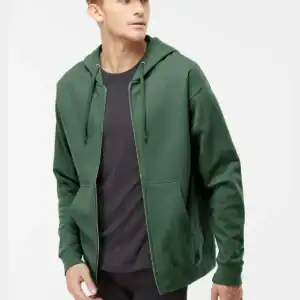
Custom Embroidered Sweatshirts & Hoodies
Price range: $31.95 through $35.95 Select options This product has options that may be chosen on the product page
For a softer casual-workwear direction, compare the Gildan 64000 Softstyle company T-shirt with the needs of your crew. Final garment selection should still account for your work environment and the decoration you want.
A Practical Seven-Step Company Apparel Selection Process
- Define roles: identify who is customer-facing, active, indoor, outdoor or moving between environments.
- Set nonnegotiable requirements: include safety, dress standards, climate, tasks and cleaning needs.
- Shortlist garments: compare fabrics, fits, closures, weight, size ranges and reordering practicality.
- Run the no-logo test: ask employees to try candidates and explain whether they would willingly wear them.
- Approve decoration: verify logo readability, size, placement and comfort on the chosen garment.
- Collect sizes and quantities: account for laundry, schedules, spares and new hires.
- Document the standard: save garment and artwork decisions so repeat orders stay consistent.
If one candidate fails the wearability test, change the garment before investing in a large order. A short trial can reveal more than another round of choosing colors from a screen.
Frequently Asked Questions About Company Apparel for Employees
What is the best company apparel for employees?
The best company apparel for employees fits the job, feels comfortable through a normal shift, meets dress and safety requirements, offers suitable sizing and can be washed and reordered consistently. The right garment may differ by role.
Should every employee wear the same uniform?
No. Employees can have different approved polos, work shirts, T-shirts or outer layers while sharing the same company colors, logo standards and overall appearance. Job requirements should guide the choices.
Should employee uniforms be embroidered or printed?
It depends on the garment, artwork, placement, design size and quantity. Embroidery often suits smaller professional logos, while printing may better suit larger or more colorful artwork. Evaluate decoration comfort as well as appearance.
How do I prevent employees from choosing the wrong uniform size?
Use the size chart for each exact garment, offer appropriate fit choices and collect sizes directly from employees. Try-on samples can help where practical, especially when ordering different garment types or layers.
How many shirts or hoodies should each employee receive?
Base the quantity on how often the item is required, the employee’s schedule, laundering opportunities, seasonal use, replacement needs and new-hire planning. There is no single quantity that works for every business.
Build a Uniform Employees Choose to Wear
Professional branding matters, but comfort and practicality determine whether apparel becomes part of the team’s daily routine. Put the employee and the work first. Then add a clean, consistent logo system to garments worth wearing.
Ready to choose better company apparel?
Tell Custom 2 Wear about your roles, quantities, garment preferences and logo. We’ll help you compare practical options for your next uniform order.