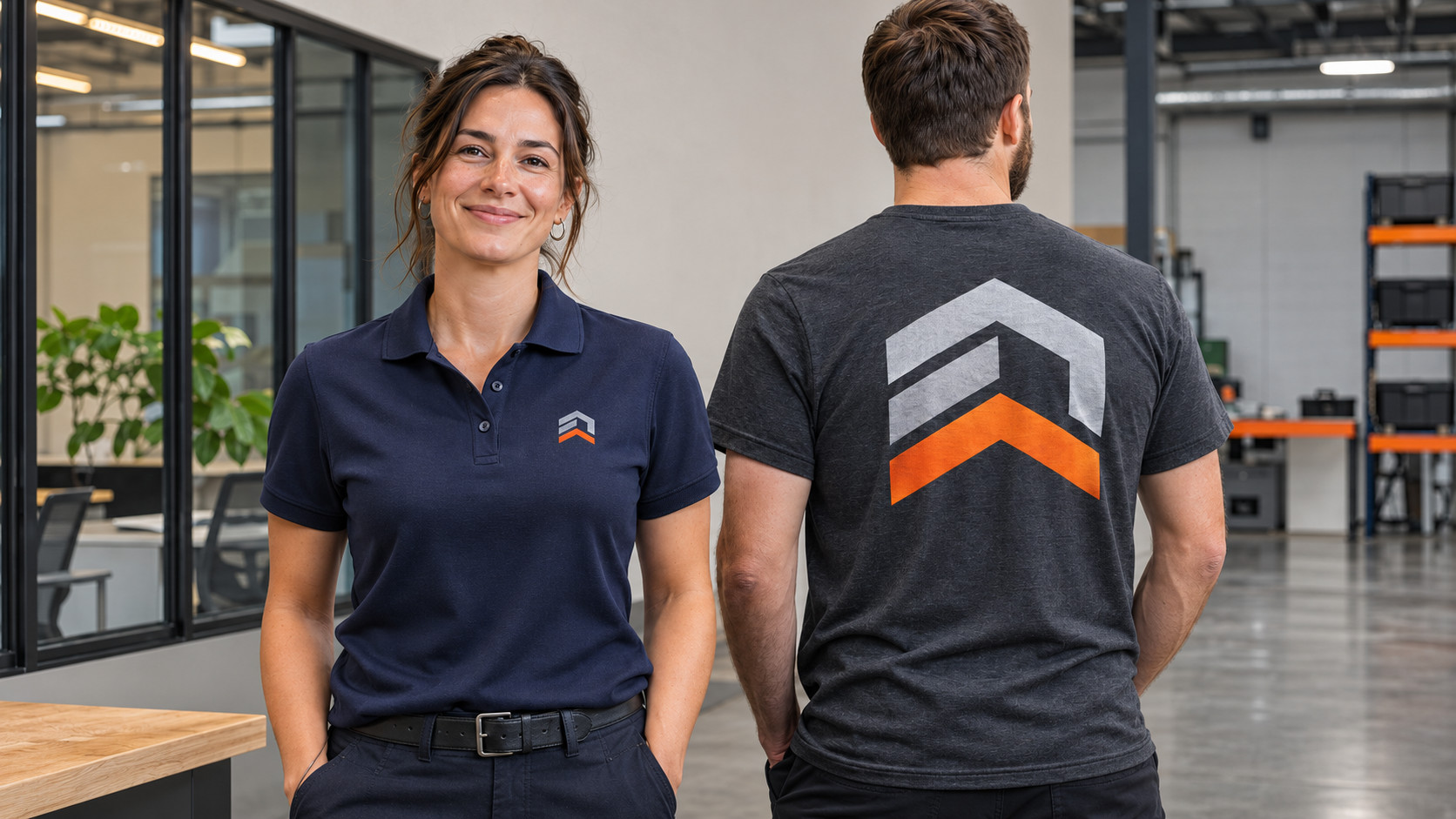
How big should a logo be on a shirt? There is no single dimension that looks right on every garment. For many adult business uniforms, a wide left-chest company logo around 3.5–4 inches across is a useful starting point. But logo proportions, garment cut, usable decoration area, embroidery versus printing, and the amount of lettering can all change the final size. A tall stacked logo should not automatically be made 4 inches wide, and a full-back print needs an entirely different scale.
Quick Answer: How Big Should a Logo Be on a Shirt?
Start with the space, not the number. Use about 3.5–4 inches of width as a first mockup for a typical wide adult left-chest logo; 3–3.5 inches may look better on trim polos or compact marks. Full-back prints on adult T-shirts commonly start around 10–12 inches wide. These are planning ranges, not universal production limits.
Measure the actual artwork at its final width and height, check small text, and approve the design on the selected garment before production.
This guide helps owners and uniform buyers choose a professional shirt logo size for polos, T-shirts, hoodies, sweatshirts, work shirts, and jackets—then keep that sizing consistent when it is time to reorder. If you are still deciding where your brand belongs, start with our logo placement ideas for custom business apparel.
1. Why Bigger Isn’t Always Better
A large mark can be useful when the goal is distance visibility, especially on the back of a crew shirt. On a customer-facing polo, however, an oversized chest logo can overwhelm the garment, crowd a placket or pocket, and draw attention away from the employee’s overall professional appearance.
There is also a production difference. A larger embroidered area generally means more stitches, more handling of fabric and potentially a heavier-feeling design. Printing can cover a larger area more comfortably for many designs, but a large graphic still needs sufficient contrast, space from seams, and a suitable surface.
Practical rule: The right logo size is the smallest size that stays recognizable and readable in its intended viewing situation—not the largest design that fits the machine or shirt.
For an office or service counter, clear left-chest identification usually matters more than filling the entire panel. For outdoor crews, adding a large back print can improve visibility without enlarging the front logo.
2. How Large Should a Left-Chest Company Logo Be?
For an adult shirt or polo, start by viewing a left chest logo size around 3.5–4 inches wide when the logo has a horizontal shape. Many compact logos look balanced at 3–3.5 inches. The final measurement is the overall decorated artwork—not simply the width of the company name inside it.
Wide, square and tall logos need different dimensions
- Wide horizontal logo: A mockup measuring 3.75 inches wide by 1.25 inches tall may be balanced on a standard adult polo.
- Square or nearly square symbol: A 2.5–3-inch width and similar height may be more appropriate than stretching it to 4 inches.
- Stacked or tall logo: A mockup around 2.5 inches wide by 3 inches tall may fit the left chest more naturally than a 4-inch-wide version that becomes excessively tall.
Those measurements are illustrative artwork proportions, not guaranteed fit specifications. Keep the original logo aspect ratio. Do not stretch it to reach a preferred number, and never treat width alone as approval of the design.
Left chest means the wearer’s left side. Position the decoration in relation to the collar, placket, shoulder, pocket and garment size—not just a fixed distance from the edge of a flattened shirt. Industry placement guidance from STAHLS’ also treats positioning measurements as starting guidelines that may need adjustment by garment type and size. Those placement distances are separate from the logo’s width.
3. Company Logo Size on Polo Shirts
For a professional company logo size on a polo, a 3–3.5-inch-wide embroidered mark is often an excellent first test; a clean horizontal logo may work closer to 4 inches on a roomier adult style. The collar and button placket make balance especially important, and the textured knit can affect fine embroidery details.
Best for: Office staff, sales teams, service advisors, restaurant managers and customer-facing technicians who need understated, consistent branding.
On polos, evaluate the garment’s fit, shoulder slope, placket, any chest pocket, and whether the logo is primarily a symbol or includes a long company name. A polished result may use a slightly smaller mark with better spacing rather than a larger, crowded design. For a practical garment example, see the Gildan Softstyle 64800 custom embroidered polo.
4. Logo Size on Hoodies and Sweatshirts
A hoodie logo size depends first on whether it is a left-chest mark, a full-front graphic or a back design. A 3.5–4-inch left-chest logo is a sensible starting point for many adult sweatshirts, but the thicker fabric does not automatically make an oversized chest mark look better.
- Pullover hoodie: A left-chest design keeps branding clear of the kangaroo pocket; center-front prints need to account for the pocket and hood.
- Full-zip hoodie: A one-sided chest logo usually avoids interrupting the artwork at the zipper. Across-zipper designs need specific decoration planning.
- Crewneck sweatshirt: The uninterrupted front can accommodate a center graphic, while a compact embroidered chest logo gives a uniform-style look.
- Back of hoodie: Consider the hood in its resting position; it may conceal the upper part of a print or lettering.
For garment selection and staff needs, read our company hoodies for employees buying guide and browse custom embroidered sweatshirts and hoodies. A guide to embroidered hoodies and sweaters for business teams also explains their role in a uniform program.
5. How Big Should a Logo Be on Work Shirts and Jackets?
Many work shirts can use a similar 3–4-inch chest-logo starting range, but functional details take priority. Pockets, flap closures, reflective materials, chest seams and badge panels reduce usable space. A logo should not interfere with garment function.
On button-front work shirts, confirm whether the decoration belongs above a pocket, beside it or on an open chest panel. On jackets and soft shells, zippers, seams, lining, insulation and the fabric’s response to decoration can narrow your options. A 3.5–4-inch mark may be appropriate on one jacket and awkward on another.
For example, a service company might keep the same compact logo proportions on its office polos and technician work shirts, then approve a slightly different physical size for winter jackets. The Dickies S535 custom work shirt is one current workwear option to evaluate. For specialized or safety-related apparel, confirm decoration compatibility and avoid compromising any protective or visibility features.
6. How Large Should a Back Logo Be?
For an adult T-shirt, a back print size around 10–12 inches wide is a useful starting point for a full-back company design. It is a planning range rather than a requirement: narrow designs, smaller garments, hoodies, jacket seams and different print processes can call for different dimensions. An upper-back wordmark is also a different treatment from a full-back graphic.
A landscaping crew, for example, might use a quiet 3.5-inch embroidered chest logo and a bold printed back design showing the company name and one key service line. The back becomes a visibility tool while the front stays professional. Do not cram a website, slogan, phone number and multiple tiny icons onto the same back graphic unless each element is comfortably readable at the chosen size.
Use the actual maximum decoration area for the selected garment and method; Printful’s garment placement reference illustrates how back-print limits vary by product and print process. A production mockup is more useful than treating a generic chart as a guarantee.
Quick Logo Size Comparison by Garment and Placement
| Garment or area | Good first mockup | Check before approval |
|---|---|---|
| Adult shirt, left chest | About 3.5–4 in wide for a horizontal logo | Artwork height and body fit |
| Polo, left chest | About 3–3.5 in wide; sometimes up to 4 in | Placket, knit texture, small type |
| Hoodie or sweatshirt, left chest | About 3.5–4 in wide | Pocket, zipper, garment weight |
| Work shirt or jacket, chest | About 3–4 in wide where space allows | Pocket, seams, functional details |
| Adult T-shirt, full back print | About 10–12 in wide | Garment size, print area, legibility |
These are initial design ranges for adult garments, not C2W maximums, universal industry standards, or promises of decoration compatibility. Final dimensions depend on the specific apparel and artwork.
7. Embroidery Logo Size vs. Printed Logo Size
An embroidery logo size cannot be chosen solely by the width used for a printed design. Embroidery builds the artwork from stitches, so lettering, line thickness, spacing and the garment’s stability affect the result. A screen-printed or DTF/full-color design can often retain more fine image detail and cover a larger back or front area, provided the file and garment are appropriate.
- Embroidery: Often a strong fit for professional left-chest logos on polos, work shirts, sweatshirts and jackets. Simplify fine detail and consider stitch density and fabric.
- DTF/full-color printing: Useful when a logo contains several colors or detailed artwork and a printed finish is appropriate. Tiny printed type still needs adequate contrast and resolution.
- Screen printing: Often suited to repeat designs on batches of T-shirts and larger front or back graphics. Color count, run size and artwork preparation affect practicality.
Best for: Use a compact embroidered logo for a refined front uniform mark and consider printed decoration for a larger, more visible crew-shirt back. The right pairing depends on the artwork and order rather than a single preferred method. See the Custom 2 Wear apparel decoration services for available approaches.
Planning a logo for more than one garment?
Send the logo, garment types and intended placements together. That gives us the context to discuss realistic decoration sizes before a mixed polo, T-shirt or hoodie order moves forward.
8. Why Small Text Changes the Equation
A four-inch logo is not automatically embroidery-ready. If most of that width is occupied by a symbol, the company tagline beneath it may still be only a fraction of an inch tall. Thin script, closely spaced letters and narrow outlines can disappear or merge in thread.
As a practical embroidery reference, lettering around 1/4 inch high is a safer starting point for dependable readability, although the actual font, fabric and stitch structure matter. Our minimum embroidery text and logo detail guide explains when small lettering becomes risky. Printful’s embroidery preparation guidance similarly highlights the need to manage minimum text and line dimensions for its process.
There are several fixes besides making the entire logo bigger: remove a tiny tagline from the chest version, use a stronger font, increase spacing, simplify detail or make a separate large printed back layout. Keep a readable primary logo as the priority.
Artwork tip: Inspect the smallest line of text first.
Do not approve a logo only because the company name looks fine at normal screen zoom. Review it at actual decorated dimensions on the correct shirt and request a simplified embroidery variation if necessary.
9. Why the Same Logo May Need Different Sizes on Different Garments
Brand consistency does not mean forcing the exact same inch measurement onto every style. The visual relationship between logo and garment may need to stay consistent even when physical dimensions change.
Consider an HVAC company with office polos, technician T-shirts, full-zip hoodies and soft-shell jackets. A compact horizontal chest mark might be approved at 3.5 inches on polos, while a roomier sweatshirt could use 3.75 inches. The jacket may require adjustment around a seam, and technician shirts may use a separate 11-inch back print. That is a coherent uniform system—not four inconsistent logos.
Women’s cuts, smaller adult sizes, plus sizes, youth sizes and different body proportions may also change how a design looks. Some uniform programs keep one chest-logo dimension across several sizes; others need a secondary approved size. Choose deliberately based on the actual size range rather than scaling every order automatically.
10. How to Keep Logo Sizing Consistent on Reorders
The easiest way to avoid inconsistent employee shirts is to save the approved decoration specification, not just the logo image. A reorder should be able to reproduce the result without guessing which version was used.
- Record width and height: Save the final measurements in inches, including whether transparent space is excluded from the measured artwork.
- Identify the approved artwork: Keep the version and file used for embroidery or printing; record any simplified chest-logo variant.
- Record placement: Note wearer-side position and measured alignment references appropriate to the actual garment.
- Identify garment and method: Keep the product style, sizes, fabric type, decoration method and any relevant production notes together.
- Retain visual approval: Save an approved mockup or production sample reference, especially for new hires and mixed-garment reorders.
- Review changes: If the blank garment, sizing range or artwork changes, check placement and dimensions again before approving the reorder.
For a business with frequent staff changes, this simple specification sheet can prevent mismatched logos across batches. It also makes it easier to maintain a consistent appearance while replacing individual uniforms over time.
Business-Ready Garments to Evaluate for Logo Placement
These currently listed C2W garment options provide useful starting points for comparing a traditional embroidered polo, a branded hoodie and a printed company T-shirt. The final logo dimensions and decoration method still need to suit each garment and design.
-
 Price range: $12.95 through $19.95 Select options This product has options that may be chosen on the product page
-
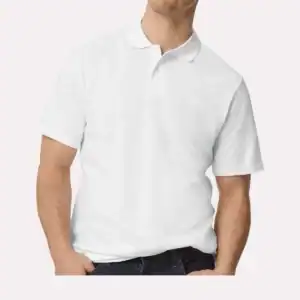
Custom Embroidered Polo Shirt – Gildan Softstyle® Adult Pique Polo 64800 to Pinterest (opens in a new window)Price range: $19.95 through $23.95 Select options This product has options that may be chosen on the product page
-
Custom Logo Pullover Hoodie – Independent Trading Co. Mid-weight Hooded Sweatshirt – SS4500 to Pinterest (opens in a new window)
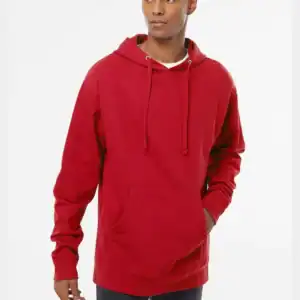
Custom Embroidered Sweatshirts & Hoodies
Price range: $25.95 through $34.95 Select options This product has options that may be chosen on the product page
Frequently Asked Questions About Shirt Logo Sizes
Is a 4-inch logo too big for a left chest?
Not necessarily. A horizontal logo about 4 inches wide can suit many adult business shirts, but a square or tall design at that width may look oversized. Compare both width and height on a garment mockup before deciding.
What is the standard left chest logo size for embroidery?
About 3–4 inches wide is a useful adult starting range, with 3.5–4 inches often appropriate for horizontal business logos. There is no universal standard; logo proportions, fabric, text and available embroidery area can change the recommendation.
How big should a company logo be on a polo?
Start by evaluating roughly 3–3.5 inches wide for a polished left-chest polo logo, and compare a larger version if the garment and horizontal artwork support it. Check the button placket and make sure the smallest embroidered lettering remains legible.
Should a hoodie logo be bigger than a polo logo?
Not automatically. A left-chest hoodie logo may look balanced at about 3.5–4 inches wide, while a polo could use a slightly smaller mark. Zippers, pockets, hoods, garment fit and decoration method matter more than the fabric category alone.
What is a good back print size for an adult company T-shirt?
A full-back print around 10–12 inches wide is a common starting mockup for adult company shirts. The correct size depends on garment dimensions, artwork shape, printing area, and how much text the design includes.
Can the same logo file be used for embroidery and printing?
The same original brand artwork can be the starting point, but embroidery frequently needs a simplified or specially prepared version. Keep separate approved files and exact dimensions for each decoration method so reorders stay consistent.
Choose the Logo Size Before You Place the Order
A professional shirt logo should fit the garment, stay readable and reproduce consistently from the first order through future employee reorders. If you are comparing embroidery and printing, send us your artwork, garment choices, target quantities and preferred placements so the dimensions can be reviewed together.