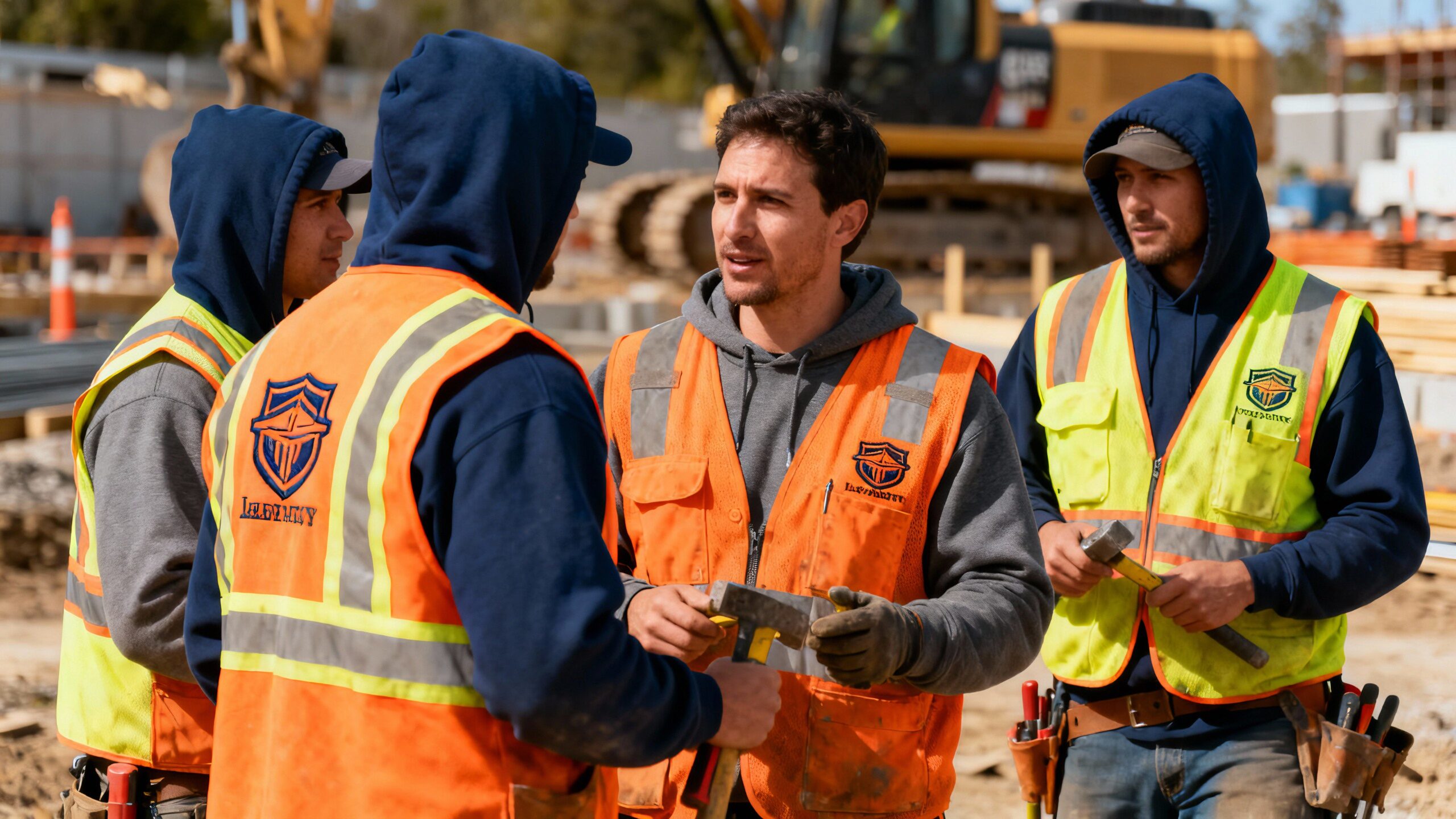
Running a construction company means making dozens of critical decisions daily—but one of the smartest long-term investments you’ll make is outfitting your crew with professional construction uniforms. Quality workwear isn’t just about looking professional on job sites; it’s about keeping your team safe, comfortable, and instantly recognizable while building your brand with every project.
At Custom2Wear, we specialize in helping construction companies, contractors, and trade businesses find durable, safety-compliant construction uniforms that withstand the toughest job site conditions. Whether you’re outfitting a small contracting crew or a large construction company, this comprehensive guide will help you make informed decisions about workwear that protects your investment in your team.
Why Professional Construction Uniforms Matter for Your Business
1. Enhanced Job Site Safety and Compliance
Safety isn’t optional in construction—it’s mandatory. Construction uniforms play a critical role in protecting your crew from daily hazards while ensuring compliance with OSHA regulations and industry safety standards.
Key safety benefits of proper construction uniforms:
- High-visibility protection: ANSI-compliant hi-vis clothing ensures workers remain visible near heavy machinery and in low-light conditions
- Cut and abrasion resistance: Heavy-duty fabrics protect against scrapes, cuts, and contact with rough materials
- Flame resistance: FR-rated garments protect workers in welding, electrical, and high-heat environments
- Weather protection: Insulated jackets, waterproof outerwear, and breathable fabrics keep crews comfortable in extreme conditions
- UV protection: Long-sleeve shirts and performance fabrics shield workers from sun exposure during outdoor projects
According to OSHA construction safety guidelines, proper protective clothing significantly reduces workplace injuries. While OSHA doesn’t mandate specific uniform styles, they require appropriate protective clothing for specific hazards—making quality workwear a smart liability protection strategy.
2. Build Professional Credibility and Customer Trust
When your crew arrives at a residential or commercial job site wearing matching, branded construction uniforms, you immediately project professionalism and legitimacy. This visual consistency builds customer confidence before your team ever picks up a tool.
How construction uniforms improve customer perception:
- Customers can easily identify authorized workers on their property
- Uniformed crews appear more organized and professional than crews in mismatched casual wear
- Branded workwear reinforces that you run an established, reputable business
- Clean, quality uniforms signal attention to detail and pride in workmanship
Research from Inc. Magazine on workplace uniforms shows that customers perceive uniformed service workers as more trustworthy and competent—a critical factor for construction businesses that rely on customer reviews and referrals.
3. Cost-Effective Mobile Advertising
Every job site becomes a billboard when your crew wears branded construction uniforms. Neighbors, passersby, and potential customers see your company name and logo dozens of times per project—free advertising that compounds with each new job.
Marketing benefits of branded construction uniforms:
- Trucks and crews at job sites create multiple touchpoints in neighborhoods
- Workers wearing branded gear during lunch breaks and commutes extend visibility
- Professional appearance makes customers more likely to recommend your services
- Social media and project photos amplify brand reach when crews wear company apparel
According to research from the Advertising Specialty Institute, branded workwear generates thousands of impressions per garment annually—making construction uniforms one of the most cost-effective marketing investments available to contractors.
Pair construction workwear with custom embroidered hats for complete, recognizable crew branding.
4. Improve Crew Morale and Team Unity
Construction work is physically demanding and often underappreciated. Providing quality construction uniforms shows your crew that you value their work, safety, and comfort—which directly impacts morale, retention, and productivity.
Employee benefits of uniform programs:
- Reduces morning clothing decisions and personal wardrobe costs for workers
- Creates sense of team identity and belonging across crews
- Demonstrates company investment in employee well-being
- Equalizes appearance across all experience levels and roles
Studies from SHRM on workplace uniforms show that thoughtfully implemented uniform programs improve employee satisfaction and reduce turnover—critical factors in today’s competitive labor market.
Essential Components of Complete Construction Uniforms
Construction Work Shirts: Foundation of Your Uniform Program
Long-sleeve work shirts are the most versatile choice for construction crews, offering year-round protection from sun, cuts, and abrasions. OSHA recommends long sleeves for construction work to minimize skin exposure to hazards.
Best construction work shirt options:
- Heavy-duty cotton twill: Traditional, durable, breathable—ideal for general construction and carpentry
- Poly-cotton blends: Moisture-wicking, wrinkle-resistant, faster drying than pure cotton
- Ripstop fabrics: Reinforced weave prevents tears from spreading—perfect for rough job sites
- Performance fabrics: Moisture-wicking technology keeps crews cool during summer months
- Flame-resistant (FR) shirts: Required for welding, electrical work, and oil/gas construction
Design features that matter:
- Chest pockets for pens, measuring tapes, and small tools
- Reinforced elbows for extended durability
- Vented back panels for breathability
- Extended shirt tails that stay tucked during bending and reaching
For warmer months or less intensive work, consider custom embroidered polo shirts for site supervisors and project managers who need professional appearance with better breathability.
Construction Work Pants: Durability Meets Functionality
Quality construction work pants must withstand kneeling, crawling, tool belt weight, and constant abrasion from materials and surfaces. OSHA requires long pants (no shorts) for construction work to protect against cuts and scrapes.
Top construction pant features:
- Reinforced knees: Double-layer or triple-stitched knees resist wear from kneeling
- Tool pockets: Hammer loops, utility pockets, and cargo pockets keep tools accessible
- Articulated knees: Pre-bent knee design allows easier movement when crouching
- Reinforced crotch gusset: Prevents blowouts from squatting and climbing
- Heavy-duty zippers and rivets: Metal hardware withstands stress better than plastic
Popular construction pant materials:
- Canvas duck cloth (12-14 oz): Heavyweight, extremely durable, ideal for heavy construction
- Denim (10-14 oz): Classic choice, good durability, widely available
- Ripstop nylon blends: Lightweight, tear-resistant, good for hot climates
- Stretch fabrics: Cotton/spandex blends provide flexibility without sacrificing durability
High-Visibility Construction Uniforms: ANSI Compliance
High-visibility (hi-vis) clothing is essential for construction workers near traffic, heavy equipment, or working in low-light conditions. Understanding ANSI/ISEA classifications ensures you provide appropriate protection.
ANSI High-Visibility Garment Classifications:
| Class | Use Case | Reflective Material | Background Material |
|---|---|---|---|
| Class 1 | Low-risk areas, parking attendants, warehouse workers | Minimal | 155 sq inches |
| Class 2 | Roadway work zones, railway workers, surveyors | 201 sq inches | 775 sq inches |
| Class 3 | Highway work, emergency responders, high-speed traffic areas | 310 sq inches | 1,240 sq inches |
High-visibility uniform options:
- Safety vests: Lightweight, easy on/off, layerable over other clothing
- Hi-vis t-shirts: More comfortable than vests, ideal for warm weather
- Hi-vis long-sleeve shirts: Year-round protection with visibility
- Hi-vis jackets: Cold-weather protection with ANSI compliance
- Hi-vis hoodies and sweatshirts: Comfortable layering with visibility
Combine hi-vis gear with custom embroidered hoodies for cold-weather crew comfort while maintaining visibility standards.
Construction Jackets and Outerwear: Weather Protection
Construction jackets must handle rain, wind, cold, and abrasion while allowing freedom of movement. The right outerwear keeps crews productive in any weather condition.
Essential construction jacket types:
- Insulated work jackets: Quilted or Sherpa lining for cold-weather protection
- Waterproof rain jackets: Sealed seams and water-resistant coating keep workers dry
- Canvas work jackets: Durable, wind-resistant, classic construction outerwear
- Softshell jackets: Flexible, breathable, water-resistant for mild weather
- Hi-vis insulated jackets: Combine warmth with ANSI visibility requirements
Jacket features that matter:
- Multiple interior and exterior pockets for tools and devices
- Storm flaps over zippers to prevent water infiltration
- Adjustable cuffs and hem to seal out wind and cold
- Reinforced elbows and shoulders for durability
- Two-way zippers for easier movement when sitting or bending
Explore our custom soft shell jackets for versatile, branded construction outerwear.
Construction Headwear: Protection and Branding
While hard hats provide essential head protection, construction hats and beanies serve important roles for sun protection, warmth, and brand visibility during non-hard-hat work.
Construction headwear options:
- Mesh trucker hats: Breathable, sun-protective, large front panel for logo embroidery
- Baseball caps: Classic style, multiple fabric options, universal fit
- Knit beanies: Cold-weather head protection with logo visibility
- Skull caps: Fit under hard hats while providing warmth or sweat absorption
- Wide-brim hats: Maximum sun protection for outdoor crews in hot climates
Browse our Richardson 112 trucker hats and custom embroidered beanies for year-round construction headwear.
How to Build an Effective Construction Uniform Program
Step 1: Assess Your Specific Needs
Different construction specialties require different uniform considerations:
- Residential contractors: Focus on professional appearance, moderate durability, customer-facing branding
- Commercial construction: Emphasize ANSI compliance, heavy-duty durability, high-visibility requirements
- Specialty trades: Consider trade-specific needs (FR clothing for welders, waterproof gear for roofers)
- Landscaping construction: Prioritize breathable fabrics, sun protection, moisture-wicking properties
Step 2: Choose Your Branding Strategy
Embroidery vs screen printing for construction uniforms:
| Method | Best For | Durability | Cost |
|---|---|---|---|
| Embroidery | Long-term workwear, professional appearance, heavy fabrics | Excellent – lasts life of garment | Higher per item |
| Screen Printing | T-shirts, large back designs, bulk promotional items | Good – may fade over time | Lower per item |
Logo placement recommendations:
- Left chest: Standard professional placement, highly visible during interactions
- Full back: Maximum visibility when workers face away, great for roadside work
- Sleeves: Additional branding opportunity without cluttering chest area
- Combination: Chest logo + back company name for comprehensive branding
Step 3: Select Quality Brands and Suppliers
Trusted construction workwear brands:
- Carhartt: Industry standard for durability, excellent for harsh conditions
- Dickies: Affordable, reliable, wide variety of styles and colors
- Red Kap: Professional appearance, good value, extensive sizing
- Gildan: Budget-friendly option for t-shirts and lighter work apparel
- Berne: Heavy-duty workwear, excellent cold-weather options
At Custom2Wear, we work with these trusted brands to provide quality construction uniforms with professional embroidery and customization.
Step 4: Implement a Sizing and Ordering System
Best practices for construction uniform ordering:
- Measure crew members properly—construction workwear often runs larger for layering
- Order samples in multiple sizes before bulk ordering
- Keep extra inventory in common sizes for new hires
- Establish replacement schedules (typically 12-18 months for heavy use)
- Consider seasonal needs—different quantities for summer vs winter apparel
Step 5: Set Clear Uniform Policies
Document expectations to ensure consistent compliance:
- Which uniform items are required vs optional
- When specific safety gear (hi-vis, FR clothing) must be worn
- Condition standards (no torn, stained, or excessively faded garments)
- Care instructions to maximize garment lifespan
- Replacement procedures when items wear out or employees change sizes
Construction Uniform Budgeting and ROI
Typical Cost Per Employee
Sample construction uniform package costs:
| Item | Quantity | Cost Per Item | Total |
|---|---|---|---|
| Work shirts (embroidered) | 3 | $35-50 | $105-150 |
| Work pants | 2 | $40-60 | $80-120 |
| Hi-vis vest or shirt | 2 | $15-35 | $30-70 |
| Work jacket | 1 | $60-100 | $60-100 |
| Cap/beanie | 2 | $15-25 | $30-50 |
| Total per employee: | $305-490 |
ROI considerations:
- Marketing impressions worth thousands of dollars annually per worker
- Reduced employee clothing expenses (benefit employees appreciate)
- Fewer safety incidents and workers’ comp claims
- Improved professional image leading to more referrals and better pricing
- Enhanced employee retention saving recruitment and training costs
Frequently Asked Questions About Construction Uniforms
Q: Are construction companies required to provide uniforms?
A: OSHA doesn’t require employers to provide general work clothing, but employers must provide required PPE (personal protective equipment) including specialized clothing like FR gear or hi-vis clothing when mandated by job hazards.
Q: How many uniform items should we provide per employee?
A: Most construction companies provide 3-5 shirts and 2-3 pairs of pants per employee for weekly rotation. This ensures workers always have clean options and reduces laundry frequency to extend garment life.
Q: Can we deduct uniform costs from employee paychecks?
A: Uniform policies vary by state. Generally, if you require specific branded uniforms, you cannot deduct costs that would reduce wages below minimum wage. Consult local labor laws or an attorney for guidance.
Q: What’s better for construction—cotton or synthetic fabrics?
A: Poly-cotton blends (50/50 or 65/35) offer the best balance for most construction work—durability of cotton with moisture-wicking and quick-dry properties of synthetics. Pure cotton is more breathable but takes longer to dry and wrinkles more.
Q: How do we handle uniform care and laundering?
A: Most construction companies have employees launder their own uniforms. Provide care instructions and consider uniform services for larger companies. Heavy-duty construction clothing should be washed cold and tumble dried low to prevent shrinkage.
Q: What’s the typical lifespan of construction uniforms?
A: With daily wear, expect 12-24 months from quality construction workwear. Factors affecting lifespan include fabric quality, job intensity, care practices, and environmental conditions. Budget for annual or bi-annual replacements.
Q: Do embroidered logos hold up on construction workwear?
A: Yes—embroidery is extremely durable and typically outlasts the garment itself. Quality embroidery withstands hundreds of washes and heavy wear, making it ideal for construction uniforms. For care tips, check expert work clothing care guidelines.
Q: Should we provide different uniforms for different roles?
A: Many companies differentiate roles through uniform variations—supervisors might wear polo shirts while crews wear work shirts, or different colors distinguish departments. Maintain logo consistency across all variations.
Get Started with Professional Construction Uniforms
Investing in quality construction uniforms protects your crew, builds your brand, and projects professionalism on every job site. From durable work shirts and pants to hi-vis safety gear and branded outerwear, the right uniform program pays dividends in safety, marketing, and team morale.
Request a free quote today or explore our construction workwear options. Need help planning your uniform program? Contact our team—we specialize in helping construction companies and contractors create durable, professional uniform solutions that work as hard as your crew.