
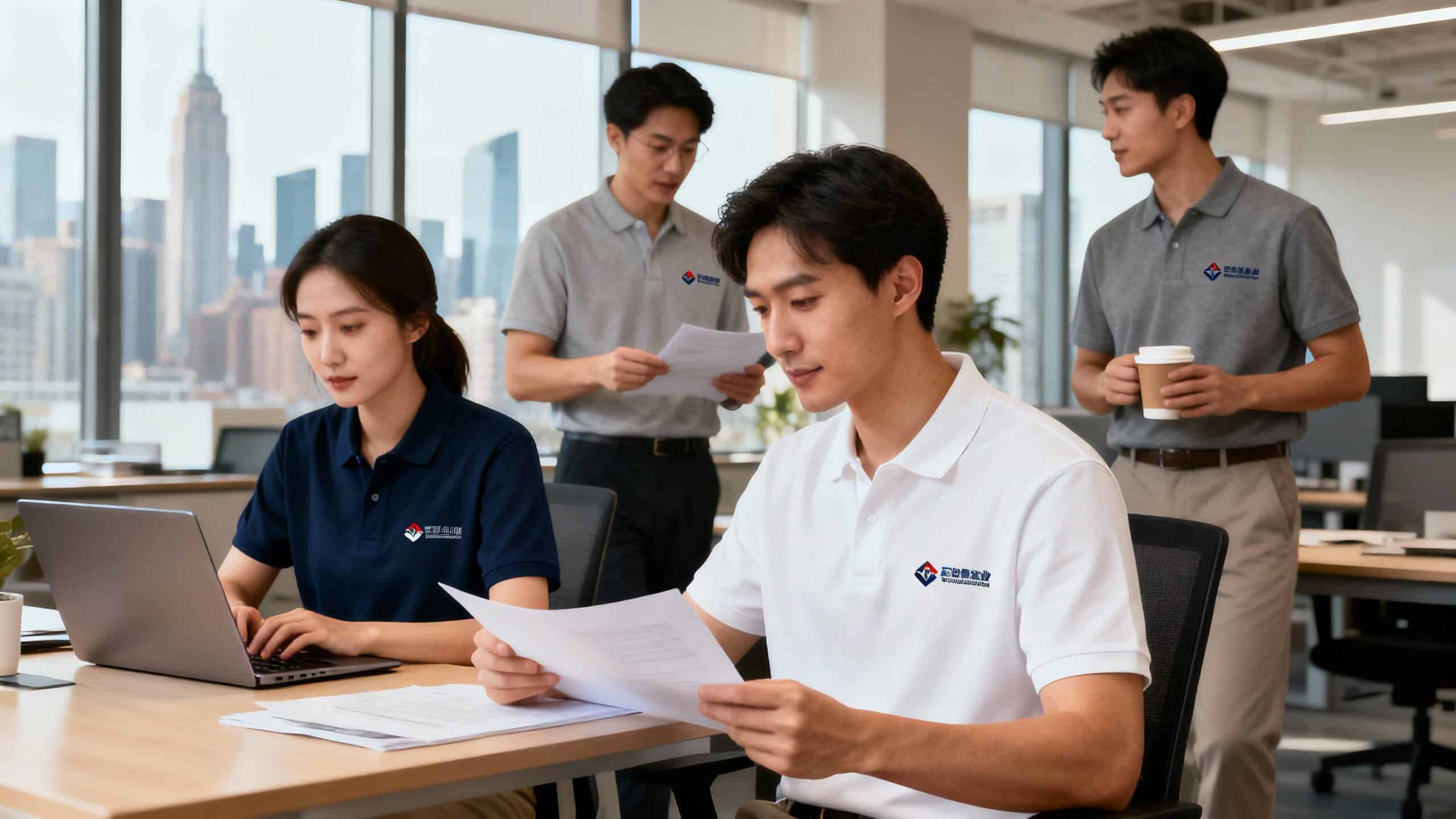
Choosing the right polo shirts for your business uniform program seems simple—until you’re faced with dozens of fabric options, fit styles, and quality variations. This comprehensive polo shirt buying guide helps small business owners navigate every decision. The wrong choice means uncomfortable employees, faded logos, and wasted budget. The right choice—informed by this polo shirt buying guide—delivers years of professional appearance, employee satisfaction, and effective brand visibility.
At Custom2Wear, we’ve helped hundreds of small businesses navigate polo shirt selection for their teams. This polo shirt buying guide breaks down everything you need to know—from fabric comparisons to embroidery considerations—so you can confidently outfit your team with polo shirts that look great, last long, and represent your brand professionally.
Polo Shirt Buying Guide: Why Polos Are the Smart Uniform Choice
Polo shirts strike the perfect balance between professional appearance and practical comfort. Unlike button-down dress shirts that can feel restrictive, or t-shirts that appear too casual, business polo shirts offer versatility that works across industries and settings.
Key advantages of polo shirt uniforms:
- Professional yet approachable: Collared appearance maintains business credibility without formal stuffiness
- Comfortable for all-day wear: Knit construction allows natural stretch and movement
- Easy care and maintenance: Most polos are machine washable and resist wrinkles
- Excellent embroidery surface: Stable knit fabric holds logo detail exceptionally well
- Year-round versatility: Works as standalone in warm weather, layers under jackets in cold
- Wide availability and sizing: Available in unisex and gender-specific fits from XS to 6XL+
- Cost-effective uniforms: Lower cost than dress shirts, more professional than t-shirts
According to research on workplace apparel from Lands’ End Business, polo shirts have become the standard for business casual environments precisely because they balance functionality with professional image—making them ideal for small business uniforms.
Polo Shirt Buying Guide: Understanding Fabrics and Materials
Fabric is the single most important factor determining polo shirt performance, comfort, and longevity. According to this polo shirt buying guide, understanding fabric composition is the foundation of making smart uniform decisions. Every polo shirt buying guide emphasizes fabric choice because it determines comfort, durability, and employee satisfaction more than any other factor. Here’s what you need to know about each major fabric type.
100% Cotton Polos: Classic Comfort with Trade-offs
100% cotton polo shirts offer unmatched softness and breathability, making them popular for office environments and customer-facing retail roles.
Advantages of cotton polos:
- Extremely soft and comfortable against skin
- Highly breathable—excellent for warm office environments
- Natural fiber appeals to employees preferring non-synthetic fabrics
- Premium feel appropriate for customer-facing roles
- Excellent embroidery surface with stable weave
Disadvantages of cotton polos:
- Prone to shrinkage (even “preshrunk” cotton can shrink 3-5% with hot wash/dry)
- Wrinkles easily—may require ironing for crisp appearance
- Absorbs moisture and takes longer to dry than synthetics
- Can stretch out of shape over time, especially at collar and cuffs
- Less color retention compared to synthetic blends
Best for: Climate-controlled offices, professional services, retail environments where employees interact with customers indoors
Care considerations: Wash cold, tumble dry low or hang dry to minimize shrinkage. Budget for gradual replacement as collars and cuffs lose shape.
Poly-Cotton Blend Polos: The Versatile Workhorse
Poly-cotton blend polos (typically 50/50 or 65/35 polyester/cotton) combine the best properties of both fibers, making them the most popular choice for business uniforms.
Advantages of poly-cotton polos:
- Excellent durability—withstands repeated washing without significant wear
- Wrinkle-resistant—stays presentable throughout workday
- Color retention—maintains vibrancy wash after wash
- Shape retention—collars and cuffs maintain structure longer
- Faster drying than pure cotton
- Less shrinkage compared to 100% cotton
- More affordable than performance fabrics
- Good embroidery surface with stable weave
Disadvantages of poly-cotton polos:
- Slightly less breathable than 100% cotton
- Can feel warmer in very hot environments
- Less soft than pure cotton (though quality blends are quite comfortable)
- May pill slightly with heavy friction (tool belts, backpacks)
Best for: Most business environments—retail, service businesses, light industrial, hospitality, offices with varied temperatures
Popular blends:
- 50/50 poly-cotton: Balanced performance and comfort
- 65/35 poly-cotton: More durability and wrinkle resistance
- 60/40 cotton-poly: Slightly softer hand feel with good performance
Browse our Gildan DryBlend 50/50 polos for excellent poly-cotton blend options.
100% Polyester Performance Polos: Built for Active Work
Performance polo shirts use advanced synthetic fabrics engineered for moisture management, making them ideal for physically demanding or outdoor work environments.
Advantages of performance polos:
- Superior moisture-wicking—pulls sweat away from skin
- Quick-drying—ready to wear again in minimal time
- Extremely durable—resists wear, tearing, and abrasion
- Excellent color retention—vivid colors stay bright
- UV protection—many offer UPF 30-50+ sun blocking
- Antimicrobial options—resist odor buildup
- Lightweight—doesn’t weigh down during activity
- Minimal shrinkage—maintains size consistency
Disadvantages of performance polos:
- Higher cost per garment than cotton or blends
- Less breathable feeling than natural fibers
- Can feel “plasticky” or synthetic to some wearers
- May show sweat marks more visibly on some colors
- Not ideal for embroidery with very fine detail (though most logos work well)
Best for: Outdoor businesses (landscaping, construction management), active retail (sporting goods), event staff, warehouse and logistics, restaurants, fitness facilities
Technologies to look for:
- Moisture-wicking channels built into fabric
- Mesh panels for ventilation
- UV protection ratings (UPF 30-50+)
- Antimicrobial treatments
- Snag-resistant construction
Polo Shirt Buying Guide: Pique vs Jersey Construction
Beyond fiber content, how the fabric is knitted significantly affects appearance, durability, and functionality.
Pique Knit Polos: The Traditional Choice
Pique fabric (pronounced “pee-KAY”) features a textured, waffle-like surface created by a raised knit pattern. This is the classic polo shirt construction most people recognize.
Advantages of pique polos:
- Structured appearance—looks more formal and professional
- Excellent breathability—textured surface allows air circulation
- Hides minor wrinkles and imperfections better than smooth knits
- Traditional, timeless aesthetic
- Superior embroidery surface—texture adds depth to logos
- More durable—textured weave resists snagging
Best for: Professional services, customer-facing roles, office environments, anywhere traditional business appearance matters
Jersey Knit Polos: Modern and Comfortable
Jersey knit polos have a smooth, flat surface similar to t-shirt fabric but with polo styling (collar, buttons, slightly more structured).
Advantages of jersey polos:
- Softer hand feel—more t-shirt-like comfort
- Excellent drape—looks more fitted and contemporary
- Better for screen printing (smoother surface)
- More stretch—increased mobility and comfort
- Modern, fashion-forward appearance
Best for: Tech companies, creative agencies, casual retail, hospitality, anywhere modern aesthetic is preferred
Verdict: For most business uniforms, pique knit polos offer better durability and more professional appearance. Jersey knits work well for fashion-forward brands or very casual environments.
Polo Shirt Buying Guide: Choosing the Right Fit Style
Proper fit is essential for employee comfort and professional appearance. Poor fit leads to uniform non-compliance and unhappy staff.
Classic/Regular Fit
- Relaxed through chest and torso
- Comfortable for all body types
- Traditional cut with more room
- Best for: Manufacturing, construction, service industries, older workforce
Modern/Tailored Fit
- Slightly slimmer through body
- Contemporary appearance without being tight
- Flatters most body shapes
- Best for: Professional services, retail, hospitality, younger workforce
Slim/Athletic Fit
- Narrow cut through torso
- Fashion-forward, fitted appearance
- May not accommodate all body types
- Best for: Fashion retail, tech startups, younger demographics
Women’s Specific Fits
Don’t default to unisex for female employees—women’s specific polos offer better fit and appearance:
- Contoured through waist and bust
- Shorter torso length for proper proportions
- Narrower shoulders and sleeves
- Side seams for better shape retention
Explore our women’s polo shirt options for gender-specific fits.
Sizing tip: Always order samples in multiple sizes and fits before committing to bulk orders. What works on a spec sheet may not work on your actual employees.
Polo Shirt Quality Indicators: What to Look For
Not all polos are created equal. A comprehensive polo shirt buying guide must address quality markers that separate premium uniforms from budget options. This polo shirt buying guide quality checklist ensures you invest in polos that last and maintain professional appearance:
Construction Quality
- Seam stitching: Look for double-needle stitching at hems and seams—prevents unraveling
- Collar construction: Should have interfacing or stay to maintain shape and prevent curling
- Button quality: Durable buttons sewn with reinforced stitching (cheap buttons pop off easily)
- Button placket: Clean-finished or reinforced placket prevents stretching and gaping
- Side seams: Seamed sides (not tubular construction) maintain better shape
- Taped neck: Fabric tape inside neck seam prevents stretching
Fabric Weight
Measured in ounces per square yard—heavier generally means more durable:
- Lightweight (4-5 oz): Best for very hot climates, less durable
- Mid-weight (5-6.5 oz): Ideal balance for most business uniforms
- Heavyweight (7+ oz): Very durable but may be too warm for some environments
Sweet spot for business uniforms: 5.5-6.5 oz provides good durability without excessive bulk or heat.
Thread Count and Stitch Density
- Higher stitch count = tighter, more durable fabric
- Look for 18-24 stitches per inch at hems
- Finer gauge knit creates smoother, more professional appearance
Embroidery Considerations for Business Polo Shirts
Your logo will be on these shirts for years—ensure it looks professional and lasts. No polo shirt buying guide is complete without addressing logo decoration. This polo shirt buying guide embroidery section helps you understand how fabric choice impacts logo quality and longevity.
Best Fabrics for Embroidery
| Fabric Type | Embroidery Quality | Notes |
|---|---|---|
| Cotton pique | Excellent | Stable weave, textured depth enhances logos |
| Poly-cotton pique | Excellent | Stable, durable, holds detail well |
| Cotton jersey | Good | May require backing stabilizer for detail |
| Performance polyester | Good to Very Good | Works well for simple logos, may show backing |
Logo Design Tips for Embroidery
- Simplify complex designs: Fine details under 1/8″ don’t embroider well
- Avoid tiny text: Text under 1/4″ tall becomes illegible
- Use high contrast colors: Light logo on dark shirt or vice versa for visibility
- Consider 3D puff embroidery: Adds dimension and premium appearance to text and logos
- Standard placement: Left chest (3-4″ wide) is most common and professional
- Alternative placements: Sleeve embroidery, back yoke, or combination placements
Polo Shirt Color Selection Strategy
Color choices affect brand perception, practicality, and employee satisfaction.
Most Professional Business Colors
| Color | Best For | Considerations |
|---|---|---|
| Navy | Professional services, offices, universal appeal | Hides stains well, works with most logo colors |
| Black | Retail, hospitality, security, sleek modern look | Shows lint/dust, can feel warm in sun |
| White | Healthcare, food service, clean professional image | Shows stains easily, requires frequent washing |
| Charcoal/Gray | Service businesses, light industrial, versatile | Practical stain concealment, professional appearance |
| Royal Blue | Tech, healthcare, automotive, friendly approachable | Highly visible, professional, conceals stains well |
| Burgundy/Maroon | Healthcare, education, hospitality, sophisticated | Elegant appearance, good stain resistance |
Industry-Specific Color Recommendations
- Healthcare/Dental: Navy, ceil blue, white, burgundy
- Technology: Black, charcoal, royal blue, tech-forward colors
- Automotive: Black, red, gray, brand-matching colors
- Food Service: Black, white, burgundy (avoid light colors that show stains)
- Retail: Brand-aligned colors, often multiple options for variety
- Professional Services: Navy, charcoal, white, conservative tones
According to research on color psychology in business, color choices significantly impact customer perception—navy conveys trust and professionalism, while black suggests sophistication and authority.
Multiple Color Strategy
Consider offering 2-3 color options:
- Accommodates employee preferences (increases buy-in)
- Allows departmental differentiation (sales in blue, operations in gray)
- Provides seasonal variety (lighter colors in summer, darker in winter)
- Maintains logo consistency across all color variations
Comparing Popular Polo Shirt Brands for Business
Budget-Friendly Options ($12-20 per shirt)
Gildan:
- Excellent value for bulk orders
- Wide color selection
- Reliable 50/50 DryBlend and 100% cotton options
- Good for promotional items or high-turnover roles
- Best seller: Gildan 8800 DryBlend
Hanes:
- Soft cotton options
- Good fit consistency
- Affordable poly-cotton blends
- Widely available sizing
Mid-Range Quality ($20-35 per shirt)
Port Authority:
- Extensive style variety
- Modern fits and colors
- Good performance fabric options
- Reliable quality for business uniforms
Sport-Tek:
- Excellent performance polos
- Moisture-wicking technology
- Athletic-inspired fits
- Good for active work environments
Premium Options ($35-60+ per shirt)
Nike/Adidas:
- Premium performance fabrics
- Brand recognition value
- Advanced moisture management
- Best for: High-end retail, sports-related businesses, executive teams
North Face/Columbia:
- Outdoor-performance technology
- Exceptional durability
- UV protection and weather resistance
- Best for: Outdoor businesses, adventure brands, active corporate teams
How Many Polo Shirts Should You Order Per Employee?
Recommended quantities based on wear frequency:
| Work Schedule | Recommended Quantity | Rationale |
|---|---|---|
| 5 days/week, year-round | 4-5 polos | One per workday plus backup for washing |
| 3-4 days/week | 3-4 polos | Covers weekly rotation |
| Part-time/seasonal | 2-3 polos | Sufficient for limited schedule |
| Management/occasional wear | 2-3 polos | Professional option when needed |
Budget tip: Start with 3 polos per employee and offer additional shirts after 6-12 months as replacements or rewards for tenure.
Polo Shirt Care Instructions for Maximum Lifespan
Proper care extends uniform life and maintains professional appearance:
Washing Guidelines
- Temperature: Cold water (prevents shrinkage and color fading)
- Detergent: Standard detergent, avoid bleach (damages fabric and embroidery)
- Stain treatment: Pre-treat stains before washing
- Inside out: Protects embroidery and reduces pilling
- Similar colors: Wash dark and light colors separately
Drying Guidelines
- Best practice: Tumble dry low or hang dry
- Avoid: High heat (causes shrinkage, damages performance fabrics)
- Remove promptly: Prevents wrinkles and set-in creases
- Collar shaping: Reshape collar while damp if necessary
Storage and Maintenance
- Hang or fold neatly (avoid wadding in bottom of locker)
- Button top button to maintain collar shape when hanging
- Replace shirts showing excessive fading, pilling, or stretched collars
- Establish visible standards—no stains, tears, or excessive wear
For detailed garment care, reference expert polo shirt care guidelines.
Complete Polo Shirt Buying Guide Checklist for Business Owners
Use this polo shirt buying guide checklist to ensure you make the right decision for your business uniform program:
Step 1: Assess Your Environment
- Indoor, climate-controlled? Follow this polo shirt buying guide recommendation: cotton or poly-cotton pique
- Active outdoor work? This polo shirt buying guide suggests: performance polyester polos
- Customer-facing roles? Polo shirt buying guide tip: prioritize professional pique construction
- Physical labor? Use this polo shirt buying guide advice: moisture-wicking performance fabrics
Step 2: Determine Your Budget
This polo shirt buying guide helps you balance cost and quality:
- Budget tier ($12-20): Gildan, Hanes—good for high-turnover roles or promotional use
- Mid-range ($20-35): Port Authority, Sport-Tek—ideal for most business uniforms
- Premium ($35-60+): Nike, North Face—best for high-end retail or executive teams
Step 3: Select Your Fabric
Refer to this polo shirt buying guide fabric section:
- Maximum comfort + preshrunk: 100% cotton
- Best all-around performance: 50/50 or 65/35 poly-cotton blend
- Active work + moisture control: 100% polyester performance
Step 4: Choose Colors and Branding
This polo shirt buying guide recommends:
- Select 1-3 colors that align with brand identity
- Ensure sufficient contrast between shirt and logo colors
- Consider offering employee color choice within approved palette
- Plan for embroidery on left chest (standard professional placement)
Step 5: Order Samples Before Bulk Purchase
The most critical step in any polo shirt buying guide:
- Order 2-3 samples in different sizes
- Have actual employees try them on
- Wash samples to test shrinkage and durability
- Verify embroidery quality and placement
- Only proceed with bulk order after sample approval
Frequently Asked Questions About Business Polo Shirts
Q: What’s the difference between pique and jersey polo shirts?
A: Pique features a textured, waffle-like weave that’s more structured and traditional. Jersey has a smooth, t-shirt-like surface that’s softer but less formal. Pique is generally better for business uniforms due to durability and professional appearance.
Q: Should we choose unisex or women’s specific polo shirts?
A: Offer both when possible. Women’s specific polos provide better fit through the torso, waist, and shoulders, leading to higher employee satisfaction. Unisex polos work for men and can serve as backup sizing.
Q: What polo shirt fabric is best for embroidery?
A: Cotton pique and poly-cotton pique fabrics provide the best embroidery surface. The stable, textured weave holds stitches securely and adds dimensional depth to logos. Performance polyester also embroiders well for most designs.
Q: How do we prevent polo shirt shrinkage?
A: Choose poly-cotton blends over 100% cotton, wash in cold water, and tumble dry on low heat or hang dry. Even “preshrunk” cotton can shrink 3-5% with hot washing and drying. Budget for some shrinkage with pure cotton polos.
Q: What’s the typical lifespan of business polo shirts?
A: With regular wear (3-4 times per week), quality polo shirts last 18-24 months before showing significant wear. Performance polos and poly-blends typically outlast 100% cotton. Factors include fabric quality, washing practices, and work environment.
Q: Can we mix different polo colors in our uniform program?
A: Absolutely! Many businesses offer 2-3 color options to accommodate employee preferences or distinguish departments. Maintain logo consistency across all colors for cohesive branding. Just ensure colors align with your brand identity.
Q: What’s the minimum order quantity for custom embroidered polos?
A: At Custom2Wear, minimums start at 12 pieces for most styles. We accommodate small business needs and growing teams. Contact us to discuss your specific requirements.
Q: Should we provide polos or require employees to purchase them?
A: Most successful uniform programs provide initial polos (typically 3-5 per employee) at no cost. This ensures compliance, quality control, and employee buy-in. Some companies charge for additional polos beyond the initial allocation.
Q: How long does custom embroidery take on polo shirts?
A: Standard turnaround is 10-14 business days after design approval. Rush orders may be available for urgent needs. Local Chicago-area businesses often receive faster turnaround. Request a quote for your specific timeline.
Q: What’s the most important factor in any polo shirt buying guide?
A: According to this polo shirt buying guide, fabric choice is the single most important decision. The right fabric ensures employee comfort, uniform longevity, and professional appearance—making it the foundation of successful uniform programs covered in every comprehensive polo shirt buying guide.
Make the Right Polo Shirt Choice for Your Business
This complete polo shirt buying guide equips you with the knowledge to make confident uniform decisions for your business. By following this polo shirt buying guide‘s recommendations on fabric, fit, quality, and care, you’ll outfit your team with polo shirts that deliver professional appearance and long-term value. Bookmark this polo shirt buying guide for reference as your uniform program grows and evolves.
Quick decision checklist:
- ✓ Indoor, climate-controlled work? → Cotton or poly-cotton pique
- ✓ Active or outdoor work? → Performance polyester polos
- ✓ Professional appearance priority? → Pique knit construction
- ✓ Budget-conscious? → Gildan or Hanes poly-cotton blends
- ✓ Premium image? → Sport-Tek, Nike, or Port Authority
- ✓ Mixed workforce? → Offer unisex and women’s specific options
Ready to use this polo shirt buying guide to outfit your team? Request a free quote today or browse our polo shirt selection. Questions about implementing recommendations from this polo shirt buying guide? Contact our team—we’re here to help you apply this polo shirt buying guide to your specific business needs.
Looking for other uniform options? Explore our custom t-shirts, embroidered hoodies, and custom hats to complete your business uniform program.